
Boulder v Suncor at the US Supreme Court: What’s at stake?
The outcome of a major hearing at the US Supreme Court next week could have a significant impact on who has power to hold fossil fuel firms financially accountable for damage caused by climate change.
Nearly ten years ago, the city and county of Boulder, Colorado, sued Suncor Energy and ExxonMobil in Colorado state court, arguing that the companies contributed to climate change through years of deceptive marketing about how greenhouse gas emissions affect the environment.
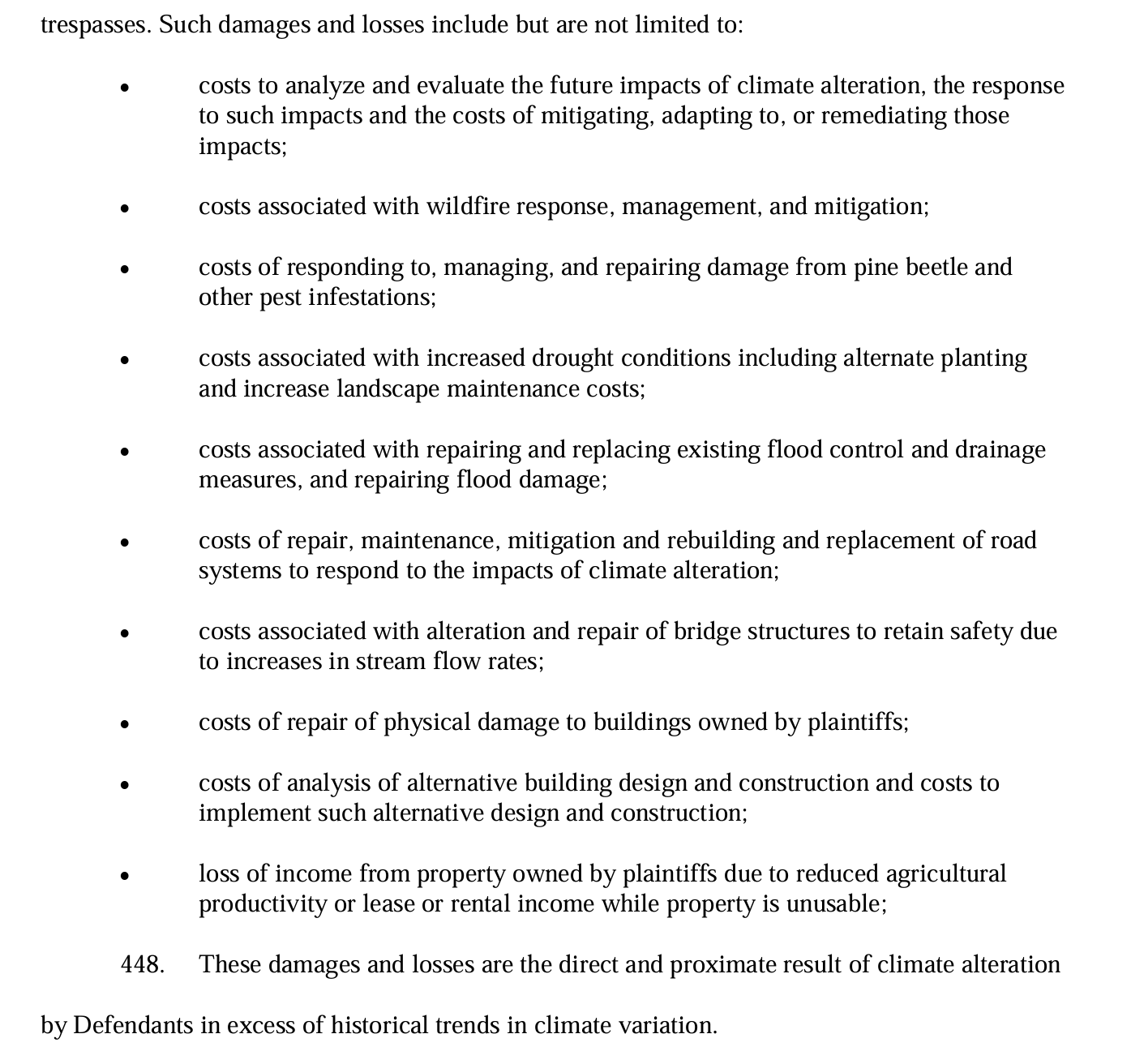
The plaintiffs sought millions of dollars in compensation, accounting for a proportion of the costs that the city and county, and therefore their taxpayers, had paid to remediate, mitigate and anticipate the impacts of climate change on the region.
A rolling stone
In their initial brief, filed in 2018, the municipal governments sued for public and private nuisance, trespass, unjust enrichment and consumer protection, all under Colorado law.
The brief explains that fossil fuels are the main source of anthropogenic greenhouse gas emissions into the atmosphere, unprecedented levels of which are altering the global climate, increasing heat and changing rainfall patterns.
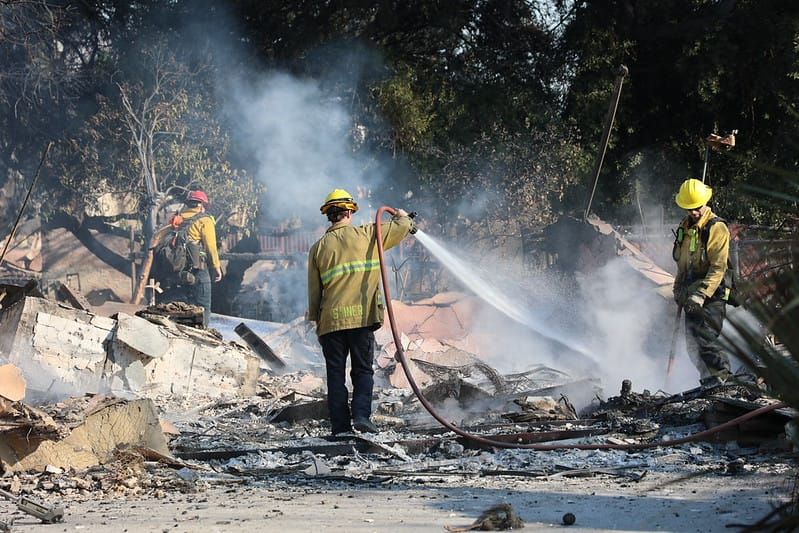
It outlines efforts that the municipal governments had already taken to reduce emissions through taxes, ordinances and by transitioning to renewable energy sources. And it points to costly local weather events, including droughts, wildfires and heatwaves, that can be linked to climate change and for which they are seeking to recoup costs.
The underlying issue of the case - whether Suncor and Exxon must compensate Boulder - has not yet been ruled on by a judge or jury. Instead, the fossil fuel companies have argued the matter is pre-empted by federal law, and therefore cannot be pursued through state court. Pointing in part to the transboundary nature of climate change which does not limit it to a particular state or nation, they contend that they cannot be held liable under Colorado law.
The fossil fuel companies previously lost an attempt to remove the case from state court in 2020. This was upheld in May 2025, when Colorado Supreme Court ruled that the state law claims could proceed.
Suncor and Exxon then appealed to the US Supreme Court, seeking a review of the Colorado Supreme Court decision and arguing that the case should be dismissed.
A hard place
The corporations frame Boulder’s suit as an attempt to impose climate policy and regulate fossil fuel companies judicially. Boulder contends that it seeks compensation only and is not asking for an injunction on Suncor and Exxon’s activities or a restriction on their emissions.
Previous attempts to get the Supreme Court to intervene in these kinds of claims were unsuccessful. But in January 2026, following an appeal from the US Department of Justice, it agreed to hear the Boulder case. Oral arguments are scheduled for 5 October.
The fossil fuel companies continue to argue that the matter is pre-empted by federal law. However recent deregulatory actions such as the Environmental Protection Agency’s rescindments of carbon rules for power plants and repealed federal greenhouse gas emission standards (themselves subject to litigation) potentially complicate this defence. Indeed, some legal experts argue that “all state common law causes of action should be available absent new congressional legislation clearly pre-empting them”.
This case is not just about what happens in Boulder; at a higher level, it tests whether municipalities can hold corporations accountable for specific, localised effects. State and local governments have long held corporate actors accountable for harming their residents in lawsuits involving tobacco, opioids, product liability and gun violence, and dozens of municipalities and at least ten states have already filed similar climate lawsuits against fossil fuel companies.
With so much at stake, the argument has become a bitter one, with dozens of interested parties submitting amicus briefs for both sides.
However, it’s worth noting that opinions on the case do not fall neatly across partisan lines. That is in part because climate change has clear impacts on the often Republican-leaning agricultural industry. In support of Boulder, for example, a group of Colorado ranchers wrote that climate change has made their livelihoods unsustainable, forcing them to limit operations and reduce the sizes of their herds.
In the eight years since the Boulder case was first filed, extreme weather events have continued, including the December 2021 Marshall Fire, which destroyed over 1,000 homes and was the most expensive fire in Colorado history. According to the University of Colorado Boulder, the state’s snowpack level in 2026 was 40% of its normal levels, which led Denver to declare a stage 1 drought.
Meanwhile, fossil fuel companies and their allies have been hard at work coordinating efforts to quash litigation as an accountability mechanism. A Consumer Watchdog report found that two thirds of the briefs filed in support of Suncor and Exxon were submitted by groups with financial interests in the fossil fuel industry. Insurance industry groups have also come out in support.
Over the past year, a flurry of opinion pieces has settled on the US press railing against “left-wing climate lawfare”, arguing that if cases such as Boulder’s succeed they would inflict enormous costs on the domestic economy and render the nation more vulnerable to coercion by foreign nations. These have ramped up in recent weeks, with critical commentary in publications such as Law.com and the Wall Street Journal. One contributor to Forbes argues that the case has "tyrannical global implications", while a recent article in the Washington Examiner claimed lawyers manufactured rural support for the Boulder case.
The US Department of Justice has also submitted a brief expressing support for the corporate defendants, while the House Judiciary Committee chose yesterday to release an interim staff report titled: 'How Radical Environmental Special Interests Manipulate the Federal Judiciary'.
The make-up of the court itself, which has a conservative majority, has come under scrutiny from both sides too. Concerns had been repeatedly raised about one of the judges, Justice Alito, by watchdog groups and campaigners who argued that his financial interests in fossil fuel firms, albeit not in Suncor or Exxon, are a serious conflict of interest. He finally recused himself just days before the hearing was due to start, shifting the court's political balance. Conservative groups have also criticised Justice Kagan, arguing that a foreword she authored in a judicial manual showed "prejudgement of the material legal questions" and demanding her own recusal.
On the rocks
It is not clear yet whether the Supreme Court has jurisdiction to hear the case; Boulder notes that it typically reviews final judgments, not intermediary orders on sub-issues.
If it determines it lacks jurisdiction to hear the case, the 2025 Colorado Supreme Court decision in favour of Boulder will stand, and the case can proceed to trial where the deciding judges and juries will be residents (and taxpayers) of the municipalities seeking compensation.
If the case crosses the jurisdictional hurdle, and the Supreme Court rules that climate accountability litigation can be heard in state court, then a trial should again be expected.
If, however, the justices rule in favor of Suncor and Exxon, Boulder and the dozens of similar climate damages suits ongoing in courts around the US will be dealt a serious blow. At least one, brought by Washington state, has already been paused awaiting the decision. However, judges in Hawaii and Oregon rejected fossil fuel companies’ bids to freeze cases in these states, with one saying the outcome is “far from certain”.
There is a further possible complication, since the Supreme Court is not the only pillar of the US democracy dealing with the question of climate accountability. Fossil fuel companies have been lobbying congress for broader immunity from climate damages suits as these cases have been ongoing in the lower courts, potentially blocking current and future claims as has happened in New Zealand.
While these developments apply directly to the US, the tone they set for climate accountability will undoubtedly resonate throughout the rest of the world.
What happens next depends on the outcome of the half-day hearing next week. A rally is being held outside the court building, with attendees including survivors of fossil-fueled wildfires from Colorado and California, who will urge judges to allow the case to continue moving toward trial.
The Supreme Court is expected to announce its decision prior to the end of its term in early summer 2027.