
Leaders and academics emphasise climate cooperation as legal obligation

States have a legal obligation to work together to phase out fossil fuels, leaders and legal experts have stressed during inaugural talks on phasing out fossil fuels in Colombia.
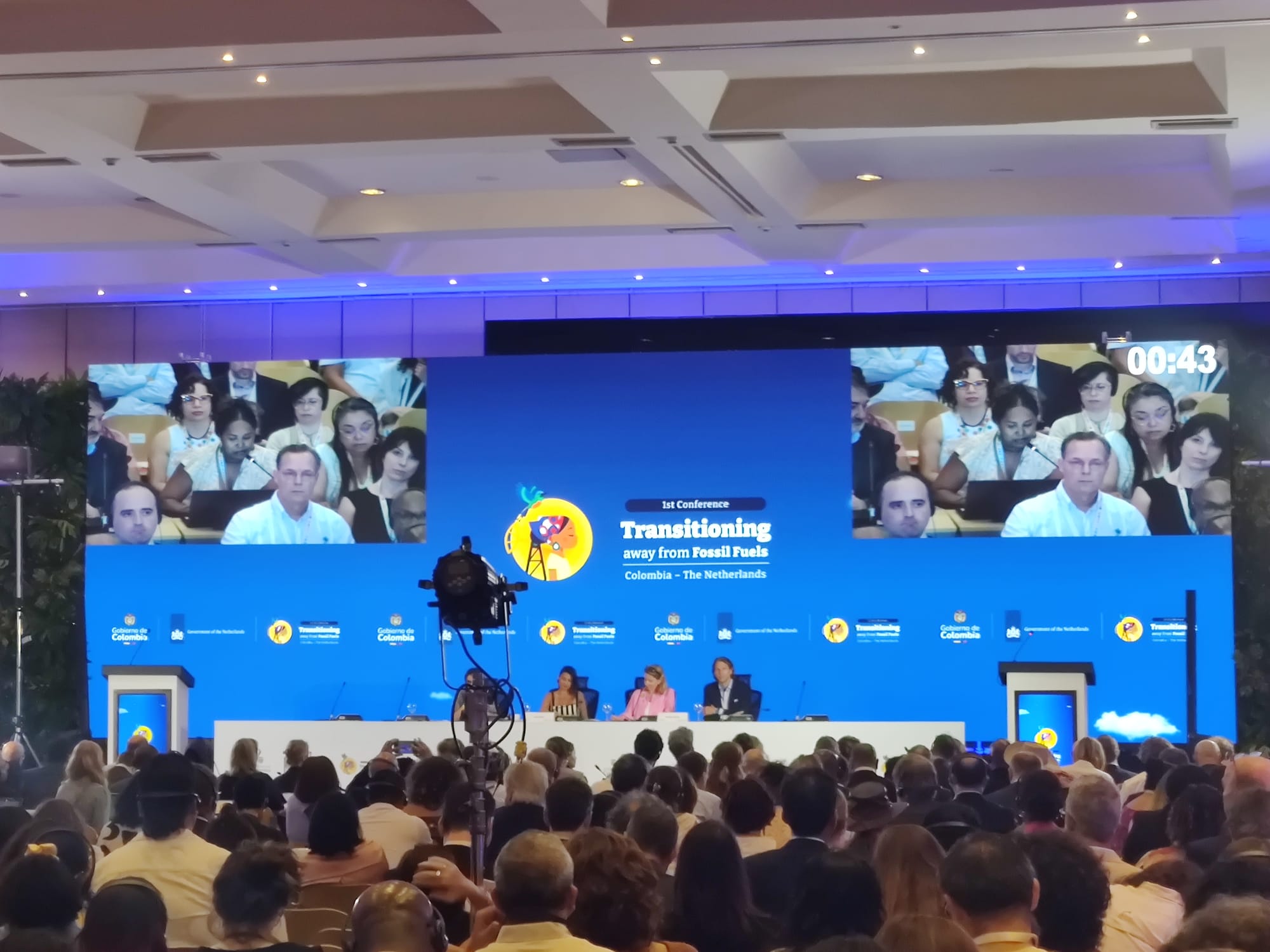
There was a strong focus on science at the Transitioning Away From Fossil Fuels conference, held in the port city of Santa Marta at the end of April, with the launch of a new science advisory panel and the publication of a detailed report summarising two days of intense academic discussions. But there was also evidence of growing emphasis on law as a driver of action.
Ralph Regenvanu, Vanuatu’s climate minister, told state delegates at the opening plenary of the talks that they were “frontrunners” in doing what is legally and scientifically required. “That is why the International Court of Justice’s landmark advisory opinion on climate change considers international cooperation indispensable and clarifies that the customary duty to cooperate is inherent in state duties,” he said.
Regenvanu was echoed by Belyndar Rikimani, one of the young people behind the student campaign that led to the opinion who is now campaigns and research lead of Pacific Island Students Fighting Climate Change (PISFCC).
Speaking on behalf of children and youth, she told the plenary that continued fossil fuel expansion is not only dangerous, “it is a violation of intergenerational equity and children’s rights. Every new fossil fuel project entrenches harm and denies our right to health, well‑being and a safe environment. This is no longer tenable under international law.”
Last year, the International Court of Justice (ICJ) issued a landmark advisory opinion saying that states have a legal responsibility to act on climate change. The document has already been woven into the narrative of new climate litigation and wedged into existing legal cases, and judges are starting to reference it in their rulings.
Hopes were also high that it could be a diplomatic lever during political climate negotiations. But although UN states had asked the court for its opinion, it failed to make a mark at last year’s UNFCCC climate talks in Belem. Saudi Arabia called its inclusion in final texts a “red, red line”.
Since then, there has been a more strategic approach to getting the document to cut through.
Regenvanu is leading efforts to secure a new UN resolution welcoming the advisory opinion in an effort to galvanise it and help it make an impact in the real world. The process has been difficult, and has been delayed several times, but a vote is currently planned for 20 May. UN experts are urging states to support it.
To help support this, ministers and officials from Tuvalu, Samoa, Fiji, Palau, Federated States of Micronesia and Vanuatu, meeting in April for the Port Vila II talks on a global just transition, formally welcomed the ICJ’s opinion, as well as similar opinions from the International Tribunal for the Law of the Sea (ITLOS) and the Inter-American Court of Human Rights (IACHR).
In particular, they highlighted the ICJ’s affirmation that state involvement in fossil fuel production, consumption, the granting of fossil fuel exploration licences or the provision of fossil fuel subsidies “may constitute an internationally wrongful act”.
The ICJ is also clear that states have a duty to cooperate in good faith to prevent significant harm under customary international law, as a “central obligation under the climate change treaties”. Such a duty even “lies at the core” of the UN Charter, it says. ITLOS and IACHR came to similar conclusions and stress that cooperation is not limited to multilateral negotiations, but can and should include financial assistance, technology transfer and information sharing.
Professors Evan J Criddle of William & Mary Law School and Evan Fox-Decent of McGill University describe how such a duty has already become firmly embedded in regimes governing oceans, transboundary rivers, disputed territories, pollution, international security and human rights, and they argue that international law requires states to cooperate even if they have not signed any explicit treaties to do so.
Let's treaty again
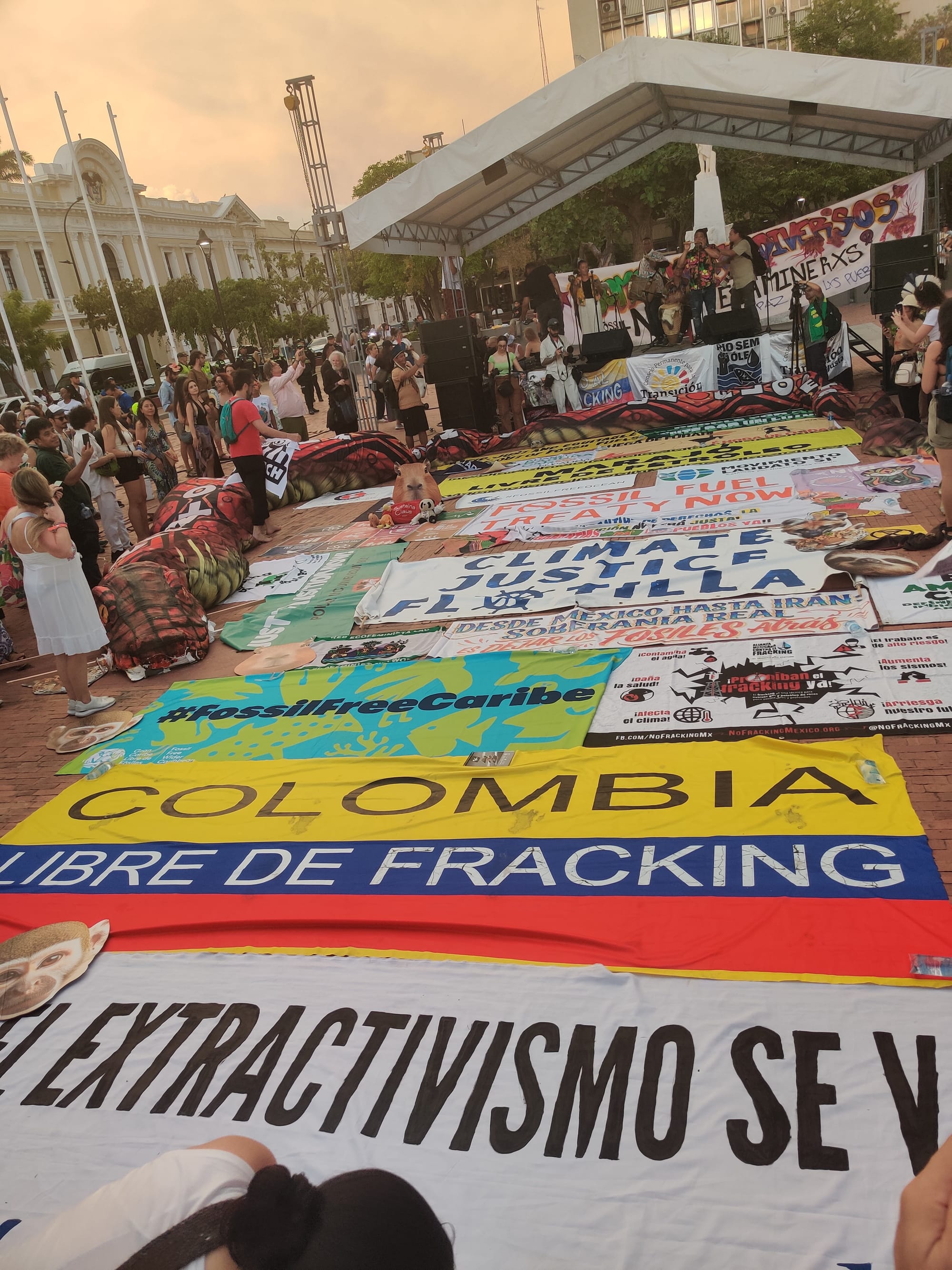
Nonetheless, a growing number of states are pledging their support for a new legally binding fossil fuel treaty. Although the Colombian government was clear that the conference would not be a space for negotiating a new treaty, the treaty initiative had a heavy presence in Santa Marta and used it as an opportunity to try to grow support.
Nikki Reisch, director of the climate and energy programme at the Center for International Environmental Law (CIEL), said such a treaty would be a response to a governance gap under existing international law rather than a lack of legal obligation. “The ICJ was really clear about the fact that the duty to cooperate is a strong and longstanding obligation. But that duty requires states to consider whether existing forms of cooperation are fit for purpose… and if they are not to consider what additional collective action is needed to supplement and complement them.”
Pacific states meeting at Port Vila committed to ensuring that any fossil fuel transition instrument is consistent with the ICJ and ITLOS advisory opinions and said they would refuse any agreement that opens “new extraction frontiers”.
They also set up a new Inter-Governmental Taskforce for a Just Transition to a Fossil Fuel Free Pacific whose role, among other things, will be to “strategically deploy the ICJ advisory opinion as a key tool across advocacy, policy and diplomacy”.
The advisory opinion was also mentioned several times in the SMART report summarising the findings of an academic pre-conference held in the days before the high-level political meeting.
The report calls on states to cooperate to curb fossil fuel supply in line with the ICJ. And it recommends they “explicitly recognise” that investor-state dispute settlement (ISDS) mechanisms are a barrier to the just transition and there is an urgent need to address them collectively.
It also stresses that reporting on exported emissions is consistent with the growing judicial consensus around the legal obligation to include scope 3 emissions in environmental impact assessments for fossil fuel activities and other industrial projects.
Legal experts and campaigners are have been pushing to embed the advisory opinion into state discussions, with mixed success. An open letter, published during the Santa Marta conference, signed by more than 250 legal academics, jurists and practitioners from around the world, outlines a growing legal consensus that states must transition away from oil, gas and coal.
"We are witnessing a terminal mismatch between three global realities,” said Patricia Galvão Ferreira, associate professor of the Marine and Environmental Law Institute at Dalhousie University, and one of the signatories. “The science that demands an immediate fossil fuel phase out, the law as codified by international courts which defines climate protection as a binding legal duty, and the political economy reality where fossil fuel production continues to expand under the weight of billions in subsidies.”
Another signatory was Mary Robinson, former president of Ireland and member of the Planetary Guardians, who consistently raises the advisory opinion in her climate advocacy.
Polarisation risks
Lukas Schaugg, policy advisor at the International Institute for Sustainable Development (IISD), thinks the advisory opinion is starting to cut through at the multilateral level, "although unevenly".
"The UNFCCC process is absorbing the opinion into civil society and academic discourse considerably faster than into operative diplomatic language. The reasons may include that major hydrocarbon producers resist findings that constrain their resource sovereignty narrative, the COP architecture privileges consensus over legal characterisation, and the advisory opinion's non-binding status offers reluctant states a comfortable off-ramp."
Schaugg says the opinion's framing of fossil fuel production, licensing and subsidies as engaging binding obligations under international law did help shape the negotiating dynamic at Santa Marta. But he warns that the legal narrative risks being polarising unless it is coupled with sustained diplomatic groundwork and "credible implementation pathways" such as IISD favourites reform of investment treaties or the exclusion of the fossil fuel sector from ISDS.