'You can only care about what you know about’: How litigation forced states to count the carbon

Environmental impact assessment has become a legal battleground for challenging the expansion of the world’s most polluting projects. But will these victories actually lower greenhouse gas emissions?
Should climate change be included in an assessment of the impacts of polluting infrastructure such as power stations and activities such as oil extraction? You might be surprised to know that it has not; developers of such activities and their regulators have typically only had to consider environmental impacts such as air pollution and harm to biodiversity.
Over the past decade, however, creative and persistent litigation by campaigners dedicated to closing this legal gap has set precedents around the world.
One of the first real wins was scored in South Africa, when the country was on a new coal power station building spree. Among its plans was a 1200MW power plant known as Thabametsi in Limpopo province, one of the first of a fresh generation of privately funded projects.
The proposed site was close to another huge coal power station development, which had already sparked air quality, water and land concerns (and is the subject of ongoing litigation). As well as these local environmental impacts, South Africa had recently made international commitments to cut its greenhouse gas emissions under the UNFCCC.
Civil society groups were not going to let this new project go ahead without a fight.
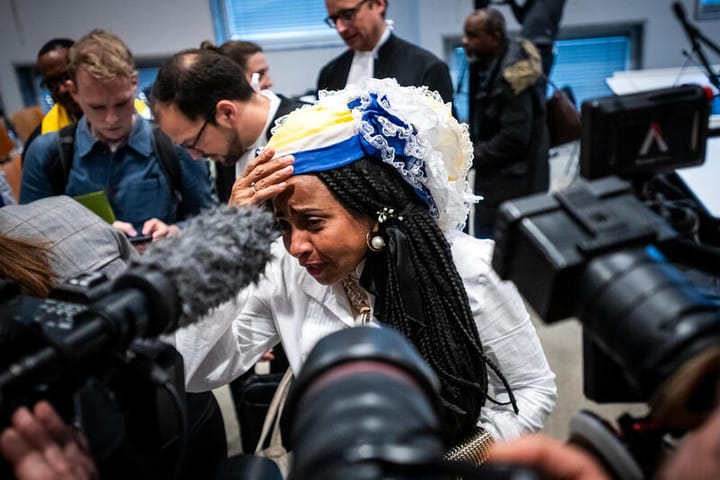
Makoma Lekalakala, director of NGO Earthlife Africa, says campaigners approached South Africa’s Department of Energy but their pleas reached deaf ears. “We were forced to go to the courts,” she tells The Wave.
In 2017, Earthlife filed suit. It was a risky move, says Lekalakala, who knew this kind of case could drag on for years. “The legal system was “not yet geared to making rulings on environmental issues or climate issues,” she recalls.
The lawsuit was not originally focused on climate change, but as time went on it became an increasingly important part of the argument.
In court, the organisation pointed out that the developer’s environmental impact assessment (EIA) included a climate change study showing that Thabametsi would be one of the most emission-intensive power plants in the world, and that the project’s very existence depended on water availability, which would itself be put at risk by climate change. Earthlife argued that the Minister of Environmental Affairs had not taken any of this properly into account when deciding whether to authorise the plant.
In 2017, Pretoria High Court agreed, saying that, even though climate change is not explicitly mentioned in the rules around EIA, it should be part of those assessments and regulators must consider it fully when deciding whether to give environmental authorisation.
It was another three years before permission was finally quashed following further legal battles over various permits. But finally, faced with an unequivocal legal ruling and a strong public divestment campaign, Thabametsi’s funders withdrew and the power station was never built.
“There were other coal-fired, independent power producers, particularly in the [neighbouring] Mpumalanga area, that were proposed, but that never took off, because this case made a precedent,” says Lekalakala.
The court not only ruled in the campaigners’ favour, but it made its decision much quicker than expected, showing that the legal system was taking the issue seriously, she notes.
Permission for the coal-fired KiPower and Khanyisa projects, for example, were both quashed on similar grounds following activist litigation. “Even today, I don't think there's going to be any other new coal-fired power plant in the country,” she says.
Land of scope and glory
Courts in other countries have proved to have a similar logical clarity.
In the UK, the government had fobbed off several lawsuits aimed at making the nation cut its greenhouse gas emissions faster. But it was a local case that exposed the poor reasoning of its regulators.
In 2024, the Supreme Court upheld a claim by environmental activist Sarah Finch, on behalf of the Weald Action Group, challenging a council decision to extend planning permission for oil drilling in Surrey.
The court found it “plain” that the climate impact of burning coal, oil and gas - one of a subset of downstream impacts that fall under the category of ‘scope 3’ emissions - must be taken into account when deciding whether to approve projects. “You can only care about what you know about,” the ruling said.
The Finch decision has had significant impacts in the UK, as I recently wrote. But it was not the first such ruling; six months earlier, Oslo district court blocked the development of three North Sea oil and gas fields on similar grounds.
More recently, approval for the largest coalmine expansion in New South Wales, Australia, was annulled because state planners did not take into account scope 3 emissions from exporting and burning the coal overseas. However, the decision is still under appeal, and the higher courts may not be as sympathetic.
As these cases demonstrate, the trend across time and jurisdictions in how courts have tackled this topic is messy. But taken as a whole, observes the LSE’s 2025 annual report on climate litigation, these developments “show the growing use of environmental law – and particularly EIA regimes – as a legal battleground for contesting fossil fuel expansion”.
According to Dr Thomas Muinzer, reader in energy transition law at the University of Aberdeen, lawsuits have shifted from considering whether climate should be included in EIA at all, to questioning which specific impacts are relevant. “We're seeing momentum, partly driven and generated by the courts, towards the assumption that scope 3 emissions would technically be included.”
Gastón Medici-Colombo, lecturer in public international law at the University of Barcelona, says that, without litigation pressure, regulators would not have engaged with scope 3 in such a systematic way. “There are clear incentives to downplay or exclude these emissions in EIA processes, especially where they are extraterritorial.”
Other industries, other jurisdictions
While this kind of litigation has mostly focused on fossil fuel projects, it has challenged other polluting industries too.
In France, for example, a court invalidated a permit given to Total to refine vegetable oils into biodiesel at the La Mède plant, because it had not assessed the climate impacts of importing palm products. The refinery is now up and running, but it does not use palm oil.
The Thabametsi case continues to be cited in climate litigation in South Africa challenging coal mines and an industrial mega-complex. And in the UK, Finch has had a considerable impact on assessments of industrial agriculture and aviation.
Even where courts do not explicitly cite foreign decisions, Medici-Colombo says similar framings and argumentative patterns often emerge across different jurisdictions because EIA is a broadly universal regulatory tool “with a largely comparable structure worldwide”.
The Thabametsi case, for example, was mentioned in lawsuits in Indonesia and Chile, albeit with mixed results; the former did not end up requiring a climate change assessment, but the latter did.
Meanwhile Finch was referenced in a European Court of Human Rights case against Norway. Although the court dismissed the claim in October 2025, it nonetheless set important standards for how states should undertake EIAs of fossil fuel projects.
Just a month after the ECHR ruling, a Norwegian appeal court agreed that licenses for the three oil fields in the North Sea were illegal. This followed an advisory opinion from the European Free Trade Association court confirming that climate assessments for new fossil fuel projects must include emissions from combustion of extracted oil and gas, not just those from extraction itself, under EU/EEA law.
And a month after that, New Zealand’s Supreme Court found, in a case initially brought by law students in 2021, that climate change is "so obviously relevant" to decisions that could lead to the extraction and consumption of fossil fuels that it must be considered when offering exploration permits for oil and gas.

The reasoning that EIA really should include climate is finally bleeding from the courts to national regulators; in November, Denmark’s Energy Appeal Board quashed a permit for Hejre oil field because its EIA did not properly assess greenhouse gas emissions.
Senka Šifkovič, an environmental lawyer who coordinated a report on assessing climate factors in EIA, says strategic litigation is “one of the cornerstones of good advocacy that pushes limits in improving procedures of environmental/climate and nature protection”.
Jacqueline Peel, professor at the University of Melbourne, told The Wave that this is one of the few areas where there is evidence that climate litigation is producing a real shift in behaviour.
“That is the story of the decade,” agrees Lucy Maxwell, co-director of the Climate Litigation Network, which published a report last year looking back at a decade of litigation since a court first upheld the Urgenda case against the Dutch government. “The scientific reality is that the fossil fuels will be burned and they will emit, even if those emissions happen outside the territory where the project is based,” she says. “The communities that brought these cases, their legal teams, have been able to put that scientific reality before the national courts, and they've accepted it.”
Levelling up
What all these lawsuits have in common is that they challenge specific projects. But future litigation could take a broader swipe at the problem.
In Australia, government proposals to remove the requirement to assess the climate impacts of new fossil fuel projects might get it sued, according to Peel. Such legal action could be domestic or even international, bolstered by the International Court of Justice’s (ICJ) advisory opinion on climate change which found countries must consider scope 3 emissions of fossil fuels in EIA (more on how the opinion affects EIA here).
There are precedents for this. In 2024, Colombia’s Constitutional Court agreed with NGOs Dejusticia and Ilex Acción Jurídica that failing to include climate change in these kinds of assessments violated the constitution and failed to guarantee the protection of the right to a healthy environment and sustainable development.
The government was ordered to revise the regulations to reflect this - the first country in the region to do this - although it was given an extension till January 2027 to do so.
A key question is what those responsible for decisions about polluting projects should do in response to all this extra climate information.
The ICJ said the production and consumption of fossil fuels, the granting of fossil fuel exploration licences or the provision of fossil fuel subsidies “may constitute an international wrongful act which is attributable to that state”, but stopped short of saying these activities are outright illegal.
Courts have already stepped into this area, in some cases denying permission on climate grounds.
Even before South Africa’s High Court put the final nail into Thabametsi’s coffin, the Australian judiciary refused to approve the Rocky Hill open-cut coal mine project in Gloucester, New South Wales. The 2019 decision by judge Brian Preston, which followed a masterclass of science communication, cited climate as an additional reason for refusal on top of environmental, social and visual concerns. The mine was never dug.
'Watershed moment'
That decision, described as a “watershed moment in the consideration of climate change and social impacts in Australia”, was referenced in many subsequent domestic planning decisions and lawsuits.
In 2021, Australian courts confirmed that climate change was a valid reason to refuse permission for a new coal mine in the Bylong Valley, including the emissions caused by burning that coal in another country. That mine was never dug either, although the South Korean company behind it still has permission to explore for coal on the land and in the meantime the town around it has withered.
Peel says the Rocky Hill judgment helped shape public expectations around the kinds of impacts that should be assessed in fossil fuel projects, “providing a foundation for such arguments in cases and advocacy in environmental law reform and shifting corporate and regulatory behaviour”. However, the decision, which rested on specific legal circumstances in a specialist court, has not led to the kind of major changes in Australian fossil fuel production that environmental advocates had hoped for.
It’s a pattern repeated elsewhere; successful litigation has not yet proved a death knell for polluting projects. In the UK, the government published new guidance setting out how scope 3 emissions from oil and gas projects should be assessed in EIA, prompting Rosebank’s developers to submit a revised assessment. A decision on whether it will now be approved is imminent.
Experts believe a new phase of the war may be opening up, where courts are increasingly being asked to interrogate what regulators are doing with these assessments.
If the UK government does approve Rosebank, for example, further litigation is almost inevitable.
Medici-Colombo warns that courts are generally wary of straying into areas that they see as belonging to the discretion of policy-makers. But he does expect them to be willing to police the legality, rationality and the integrity of the assessment process, and he has already found litigation raising a number of pertinent questions: What counts as significant emissions? How would stopping one project affect the wider market and does that matter? At what level should these decisions be made and greenhouse gas emissions assessed against a budget? Should we consider the risk of carbon lock-in from new infrastructure? Are proposed mitigation or compensation measures good enough?
The extent to which courts will want to grapple with these issues remains to be seen, and will likely vary across jurisdictions.
A case in Guyana last year shows that winning the argument on the theory of including scope 3 emissions does not necessarily lead to development being blocked. Though the court ruled that Exxonmobil must identify, describe and evaluate downstream scope 3 emissions in its EIA for the planned Hammerhead offshore oil project, it eventually dismissed the case after Exxon did so. Exxon now says it will be pumping oil from Hammerhead by 2029.
In another case, a Dutch court annulled permission for a North Sea gas project but explicitly dismissed the climate grounds saying these had already been sufficiently investigated. On the other hand, Ireland’s Supreme Court recently ordered the national planning body to have another stab at a decision to reject an onshore wind farm, saying it must clearly show how climate change was balanced with other priorities.
Bucking the trend
The US is another kettle of downstream fish. Since last year, federal agencies carrying out environmental reviews have been allowed to limit their scrutiny of the climate impacts of transport and energy infrastructure projects following a Supreme Court ruling over a controversial Utah railway project.
And even though the nation essentially invented the idea of climate litigation, campaigners are now having to go to court just to argue the simple question of whether greenhouse gases are dangerous. “It's ironic that in global climate litigation we've seen some real wins in terms of convincing courts to include climate analyses... and in the United States, we're going completely backwards,” says Jason C Rylander, legal director of the Center For Biological Diversity’s Climate Law Institute.
There’s also a risk of political backlash. In New Zealand, the government has hinted it could ignore the recent Supreme Court ruling on assessment of climate impacts - or change the law to get around it. In the UK, too, there was talk of legislating to overturn the Finch judgment. This is not happening for now but reforms to judicial review are likely.
'Judicial tipping point'
Nonetheless, Medici-Colombo’s research suggests that we may be approaching a “judicial tipping point” in which the lawful approval of new carbon-intensive projects - especially fossil fuel extraction and burning - becomes the exception rather than the rule. “In my view, many of the core legal arguments needed to reach that tipping point are already available, even if the outcomes of particular cases will continue to depend on institutional, political and evidentiary factors.”
Jake White, until recently head of legal advocacy at WWF UK, recognises that EIA is a procedural requirement rather than one that mandates specific outcomes. “But the bright light which it sheds on the true greenhouse gas impacts of certain kinds of projects makes it much harder for decision makers to wave through.”
More ambitiously, the LSE report says this kind of litigation may influence supplyside policy action on fossil fuels, which the biggest producing countries have so far been very reluctant to do.
One thing is clear: “As climate science evolves and the remaining global carbon budget tightens,” says Medici-Colombo, “I expect litigation against carbon-intensive projects to continue to grow.”