A top court was asked about climate change. Now a fragile ecosystem threatened by mining has rights
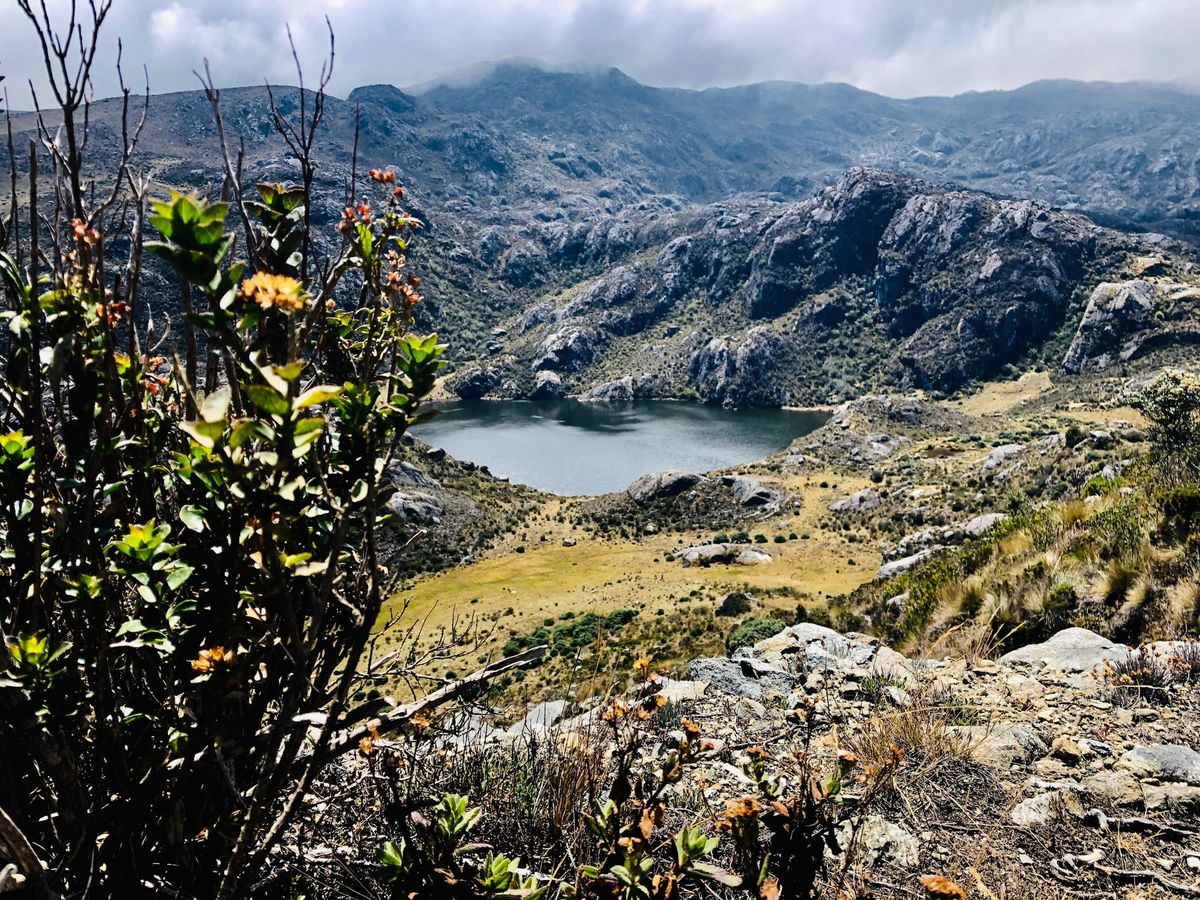
I’d like to introduce you to a high-altitude moorland, known as a páramo, which is home to a unique variety of plant and animal species such as hairy-leaved frailejones.
Páramos only exists in a few places in South America, one of which is Colombia, where they shape the lives of around 70% of the population because they are such a vital source of water. They also play a key role in climate mitigation as a carbon sink.
This particular páramo, that of Santurbán, sits in the north-east of Colombia, 50km from the Venezuelan border. Over the past 16 years it has been under serious threat from transnational mining, its deposits of copper, silver and gold attracting significant interest from companies across the Americas.
Given the páramo’s value locally and globally, both campaigners and corporations have not let this go without a fight, bringing litigation at pretty much every level in Colombia - and even internationally. “Santurbán represents an ongoing struggle to safeguard one of the most rare and fragile ecosystems in the world,” says Luisa Gómez, senior attorney at the Center for International Environmental Law (CIEL).
Slave or master
The battle began in the 1990s, when a Canadian mining firm called Greystar Resources (later Eco Oro Minerals) announced plans for an open-pit gold mine that overlapped with the páramo. There is a long history of small-scale mining in the area, but the Angostura mining project, as it was known, was to be one of the first major developments.
On becoming president of Colombia in the early 2000s, Álvaro Uribe sought to encourage foreign investment and handed out thousands of mining titles across the country. It is not a coincidence that many of the companies that wanted to cash in on this boom were Canadian; Canada’s International Development Agency helped draft Colombia’s 2001 mining law which set generous conditions for foreign firms.
Development banks also had their eye on this potentially lucractive spot. In 2009, the Angostura project attracted millions of dollars from the IFC, the World Bank’s private sector lending arm, even before Colombian authorities formally approved it.
To the páramo’s defence came an organisation called the Comité para la Defensa del Agua y del Páramo de Santurbán (Committee for the Defense of Water and the Santurbán Páramo), a diverse coalition that Gómez describes as “among the best organised grassroots movements in the country fighting for environmental justice”.
Heart of steel

The Comité coalesced around the Angostura project, gathering support from students, trade unionists, utility workers, NGOs, teachers and environmentalists who wrote petitions and organised mass demonstrations. There were numerous concerns, including the risk of armed conflict, that a cyanide-leaching process used to extract gold could contaminate water supplies and the possible displacement of people who already lived and worked there.
By 2010, the Colombian government had started to better recognise the importance of these ecosystems and passed a law restricting new extraction. The following year, Greystar withdrew its request for an open-pit environmental permit, replacing it with one for an underground mine instead.
However, the Comité remained deeply concerned and led a complaint in 2012 to the IFC’s internal grievance mechanism, known as the Compliance Advisor Ombudsman. In 2016, the ombudsman found many problems with the way the IFC had approached the investment, including not ensuring an adequate biodiversity baseline study or critical habitat assessment were undertaken.
In the years in between, the Colombia government announced a formal delimitation policy, which closed a chunk of the Santurbán páramo to mining, and the Constitutional Court ruled that mining was not allowed in páramos in general, striking down a law that had contained a number of loopholes. The IFC quietly divested from the Angostura project later in 2016 and Eco Oro formally withdrew three years later.
“This was not a magic response,” stresses Gómez; it came after a huge amount of advocacy work and mobilisation in the department of Santander, Bogotá and even Washington DC.
Heavy metal
It was not the end of the story, though, as Eco Oro Minerals fought back with an investor-state dispute settlement (ISDS) claim against Colombia for changing the rules around mining, and in 2021 a tribunal ruled in its favour. Although no compensation was ordered, UN Trade and Development (UNCTAD) singled out the decision as a worrying example of private companies using the international arbitration system to challenge climate policies, and it inspired a number of other treaty claims over Santurbán.
“These companies have intended, and continue to intend, to transform the Santurbán páramo, its forests and rivers into a mining district,” says Juan Camilo Sarmiento Lobo, a lawyer, professor and researcher, who has been involved in the Comité for seven years and is part of its legal and educational sub-committee.
Lobo says the Comité’s work is vital because more than three million living beings depend on the flow of water from the Santurbán páramo and its surrounding forests and rivers. “This includes the entire community of the Bucaramanga Metropolitan Area,” says Lobo, around 1,500,000 people, “of which I am a part”.
While Eco Oro is still looking to get the decision annulled, the ISDS rulings and the government’s increasingly restrictive attitude seemed to signal the end of mining in the páramo. But more companies had their eyes on the valuable minerals beneath its surface.
Aris Mining, another Canadian firm, currently wants to mine Soto Norte, which it describes as “one of the most attractive gold projects in the Americas”. The company says the project is outside the delimited area and will include “industry-leading environmental and social design features”.
Some people do seem worried that restricting activity in the páramo will affect their livelihoods in extraction or agriculture, with tension currently building around the persistence of illegal mining and its environmental impacts.
But Lobo, voicing concerns felt by many in the area, points to studies by the Colombian Geological Survey during the exploration phase which found evidence of water contamination and warns that the consequences of moving to full exploitation could be catastrophic. Aris Mining did not respond to a request for comment.
Le cumplimos a nuestra cita por Santurbán #MarchoXSanturban @susanamuhamad @MinAmbienteCo @petrogustavo el mandato es claro: Declaren Reserva Temporal a Santurbán y a nuestras fuentes hídricas
— Comité Santurbán (@ComiteSanturban) October 18, 2024
A @ProSotoNorte le exigimos que salga ya de nuestro territorio pic.twitter.com/IkPKDEfdbd
The Comité mobilised again and achieved another important victory last year when part of Santurbán was designated a temporary reserve zone. This suspended large-scale mining for two years, including most of the Soto Norte project, until technical studies are carried out to work out how the páramo can be properly protected.
Gómez of CIEL, which has supported environmental activism in the area for years, says this was a “big big win” by the Comité. “No other grassroots organisations in the country has achieved something like this.”
Derechos de la naturaleza
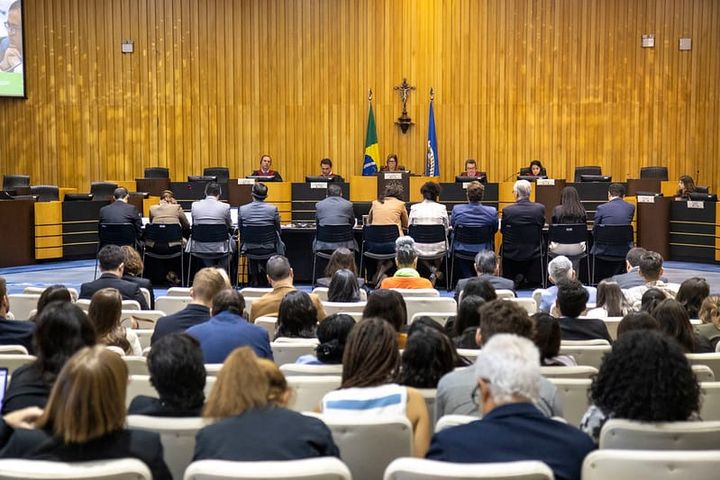
There was another twist in the tale, when a court examined two lawsuits challenging mining in the páramo: one filed by a lawyer called Antonio Jose Serrano Martinez and one by the Mayor's Office of Bucaramanga. Consolidating the two cases, the Administrative Court of Santander ruled last July that the National Environmental Licensing Authority must stop granting, extending or modifying environmental or mining licenses in the páramo, and ordered the Ministry of Environment and Sustainable Development to come up with a plan to protect it more broadly.
Crucially, it declared Santurbán a subject of rights. In a rather philosophical judgment, which relied heavily on the Inter-American Court of Human Rights’ (IACtHR) recently minted advisory opinion on climate change, as well as relevant rulings in Colombia, the judge found he had an “inescapable duty to protect, based on the intrinsic value of non-human life, the ontological foundations of shared existence”.
The court stressed that páramo ecosystems are unique, irreducible and irreplaceable, “conceived as a living reality with its own purpose in water regulation, carbon sequestration, and the support of multiple forms of life (human and non-human)”. They have value, it said, not just in Colombia but globally.
It recognised that this ecosystem is under threat from human activities such as large-scale mining as well as climate change itself, which may violate human rights to a healthy environment, water and ecological stability. These conditions, it said, show their “strategic ecological singularity, which, in legal terms, justifies their reinforced protection”.
Neither lawsuit had asked for the Santurbán páramo to be given rights. But a third case, brought by the Comité as a kind of collection action called an acción popular, had. Lobo believes the court based much of its decision on this ongoing claim, which seeks to protect the páramo and its regulation of water in the context of the climate crisis.
The Comité argues that you have to encompass the wider ecosystem to properly protect it. “While [current Colombian law] prohibits mining in the upper part of the páramo, it leaves the Andean forests and rivers that comprise the entire páramo and provide us with water unprotected,” says Lobo.
The Santander court is still considering this case, as well as an appeal over the first rights of nature ruling, and recently rejected a request from Aris Mining to have it thrown out.
From Costa Rica to Colombia
Gómez says the court’s heavy reliance on the IACtHR opinion is important because it sends a “practical message that advisory opinions are real legal tools to resolve real cases”. It is one of several cases where the AO has been used much more broadly than a strict reading of climate litigation might have you think.
“The tribunal needed to resolve how to provide enough constitutional protection to a strategic ecosystem,” says Gómez. To do that, “it used the Inter-American court’s strong linkage of human rights and environmental protection, its affirmation of intergenerational justice and its sense of ethical responsibility in addressing the ecological crisis”.
It’s worth noting that although the IACtHR recognised the rights of nature, this was not agreed unanimously; it was one of the most controversial points in the discussions, which three of seven judges disputed.
In her dissenting opinion, Nancy Hernández López, at the time president of the court, said that, while it may be “desirable” to recognise the rights of nature, she did not think it had a place within the current legal framework which was set up explicitly to protect human rights.
But Gómez sees the advisory opinion as acknowledging a long tradition of protecting rights of nature across Latin America, and says the Santander ruling is an affirmation of the Inter-American court’s authority: “It is a two-way process.”
In practical terms, Lobo says the court’s recognition gives additional legal protection that judges, administrative entities and even companies must take into account. “This reinforces the protection against any mining or extractive project that threatens the rights of the páramo.”
Whether it will make a difference in practice, however, is hard to say.
Ten years ago, the Atrato River was declared a subject of rights by Colombia’s Constitutional Court in a case brought by Indigenous and Afro-descendant communities over mining pollution.
But a recent study by the Stockholm Environment Institute found “little evidence of sustained ecological improvement”. In practice, it said, legal recognition “has not fully displaced anthropocentric governance frameworks, as the river continues to be primarily understood by state and institutional actors through its functions and uses for human life, rather than as an autonomous entity with interests of its own”.
A landmark climate lawsuit in 2018 also declared the Amazon rainforest a subject of rights. However, those behind the case have seen little positive impact from that decision, and previously told The Wave about their concerns that people had been sidelined in the equation.
Recognising that Santurbán has rights will not automatically protect it, admits Gómez. "This decision is part of a legal and social ecosystem that protects the páramo. In this case, the new government has an unavoidable judicial mandate to develop a framework that protects Santurbán and its transition or buffer zones as entities with rights, primarily by prohibiting mining activities. What is even more vital is the popular mandate - people are standing up to defend Santurbán."
"The story of Santurbán is not only a battle between David and Goliath, but between David and many, many, many Goliaths"
All large-scale mining activity in páramo is currently on hold. But the election of a new right-wing president in June has made the situation more difficult, with incoming environment minister Fabio Arjona Hincapié suggesting a more friendly approach to extractive industries. The outgoing government seemed to be trying to rush through a decision on Santurbán, but struggled to get agreement from local communities.
However just as The Wave went to press it published a proposal to protect more than 29,000 hectares of the páramo - including a watershed where Aris Mining holds concession contracts - which is open for consultation until the end of the month. The Comité welcomed the move, saying that it must happen alongside state control to end illegal mining, social investment in Soto Norte, support for agricultural production; and a transition from traditional mining to other activities that protect water resources.
Gómez stresses out how difficult and dangerous the work of protecting the páramo has been. “The story of Santurbán is not only a battle between David and Goliath, but between David and many, many, many Goliaths."
"The Comité has perilously advocated for greater public participation in decisions affecting the páramo, and have especially urged action against the widespread ignorance of the complex ecological significance of this ecosystem," she says. “They have battled large-scale economic interests but also they have battled against stigmatisation, threats and harassment in Colombia, which is the most hostile country for environmental defenders in the world.”
This repression has intensified recently, but the campaigners remained undeterred and have a meeting later this month with outgoing Colombian environment minister Irene Vélez Torres, who led the Transitioning Away from Fossil Fuels conference in April.
Lobo, who as part of the Comité sees himself as one of the guardians of the páramo, says defending Mother Earth, her territories and diverse sources of life are an “essential role” for him. But he is also a researcher at heart, telling The Wave that he has just defended his doctoral thesis on the rights of nature from a Latin American perspective. “One of its conclusions is the importance of grassroots environmental organisations as the human expression of ecosystems that possess rights.”