Inter-American Court of Human Rights advisory opinion: One year on
Inter-American Court of Human Rights advisory opinion: One year on
Three and a half years ago, the governments of Colombia and Chile in 2023 made a call to the Inter-American Court of Human Rights (IACtHR) for an advisory opinion (AO) on climate change.
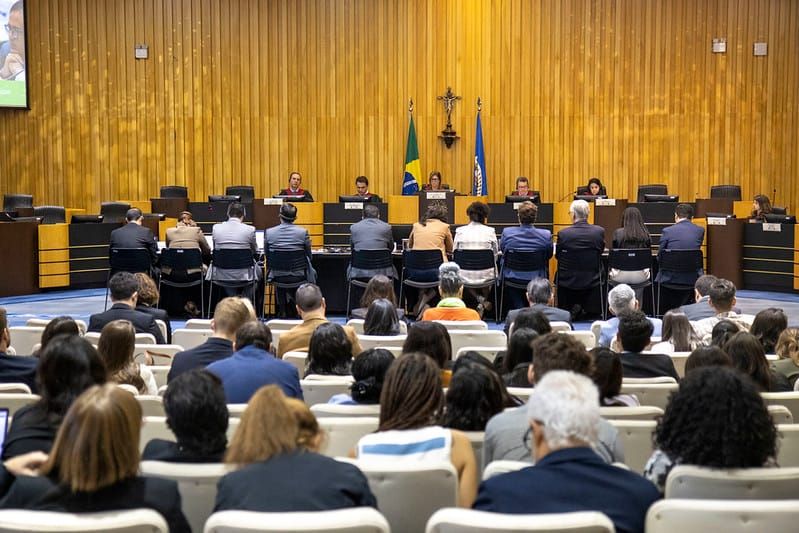
The Costa Rica-based court agreed. Right from the start of a series of historic hearings in Barbados and Brazil, which opened the doors to climate victims including young people, judges made clear that they wanted to produce a document that had a “profound” impact.
Claudia de Windt, executive director of the Inter-American Institute on Justice and Sustainability, was impressed at how invested judges seemed during this process. “They were asking the difficult questions, but they were looking for the answers,” she tells The Wave.
In July 2024 the court issued its judgment: there is a human right to a healthy climate and states have a legal duty to protect it.
"The judges were ready, the system was ready for this"
There was a general expectation that the decision was going to be progressive, says Dr Maria Antonia Tigre, director of global climate litigation at the Sabin Center for Climate Change Law, but it did not happen in a vacuum; it followed 20 years of legal decision-making, including key Indigenous cases and a gradual greening of human rights.
The major groundwork was laid in 2017 by an earlier AO, which stressed that states must protect human rights if they are affected by environmental harm, even if it happens outside their borders, and recognised that the right to a healthy environment could be upheld in a court.
Because of that, says De Windt, the court was able to go into “the nitty gritty of the procedural aspects. The judges were ready, the system was ready for this.”
This was not the only climate AO in town. The tone was set in 2024 by an opinion from the International Tribunal on the Law of the Sea, although it was slow to make its mark in the real world. Just weeks after the IACtHR, the International Court of Justice (ICJ) issued its own version which was recently recognised in a UN resolution. And there is still one pending from the African Court on Human and Peoples’ Rights.
Experts say the ICJ and IACtHR opinions, in particular, complement each other. Both courts reinforced the idea of legal obligations and said there are strict due diligence obligations to respond to the climate emergency in an appropriate manner. And while the ICJ is not a human rights court, it affirmed the importance of human rights law.
On some points, however, such as the right to a healthy climate, the IACtHR went much further. “The different tribunals decide based on their areas of competence and within the limits of their jurisdiction, as well as following their own traditions,” says Viviana Krsticevic, executive director of Center for Justice and International Law (Cejil), a human rights NGO which supported the original call for the AO. “There are obviously some developments of the Inter-American Court that wouldn't be similarly developed by jurists in Europe or at the global level.”
The general feeling seems to be that, while the ICJ opinion is good at explaining what needs doing, the IACtHR is better at setting out how it must be done.
Getting to grips
Krsticevic says there has been a “sustained effort” by academics, human rights organisations, judicial systems and ombudsmen to understand the Inter-American document.
There have been numerous seminars and conferences, reports and blog posts exploring various facets of this dense document and how different actors might use it in practice. The IACtHR itself has held events to help constitutional tribunals and supreme courts across the Americas get to grips with what it means for their work. Cejil is trying to work with prosecutors’ offices in the region too.
Although it will take time to fully incorporate the AO into policy and litigation, Krsticevic says there is a “lot of momentum” already behind it. And change is likely to happen more quickly in countries that are “more permeable to international law”.
While the ICJ is clear that its AOs are non-binding, the Inter-American Court’s doctrine of "conventionality control" requires all states that have ratified the American Convention on Human Rights to ensure that their laws and policies conform to the convention as interpreted by the court - and that includes advisory opinions.
On top of that, most countries in the Americas consider international human rights treaties at the same level as the national constitution - or even above it. De Windt says Mexico and Costa Rica are two examples where the rulings of the Inter-American system are considered legally binding.
Litigation
Tangible change is more evident in countries that have an active civil society - and litigation is an obvious first step.
An early example was an order by a Brazilian court that a coal mine and power plant in Rio Grande do Sul must stop operating on climate grounds. The remarkably strong judgment relied heavily on AOs from the IACtHR and ICJ, although it was quickly overturned by an appeal court and the case remains pending.
Earlier this year, Mexico’s Supreme Court used the AO to guide a lower court in assessing an ongoing case brought by someone from the state of Oaxaca. He alleges that his right to a healthy environment is being violated because a national park is not properly protected.
More recently, Costa Rica’s government and its technical body Setena were ordered to incorporate climate into national environmental impact assessment procedures, in a ruling that relied heavily on the IACtHR AO.
A major contribution of the court was its section on climate science, which Mariana Campos, Latin America coordinator for World’s Youth for Climate Justice, says is now being used as an “authoritative source”. She notes how Mexico’s Supreme Court relies on the IACtHR’s elaboration of adverse effects of carbon dioxide, methane and nitrous oxide in a recent draft ruling upholding a state tax on greenhouse gas emissions.
Litigation using the AO has only just begun. Cejil is mentioning it in cases seeking to access information on two landfills: the infamous Norte 3 landfill in Argentina - a methane super-emitter - and the bloated and leaky Doña Juana. The organisation sees methane litigation as offering a “concrete pathway for climate justice”.
Cejil also brought up the standards developed in the AO on access to information, participation and climate-related human rights obligations in an amicus brief filed over an ongoing Bolivian case to do with lithium extraction.
Although the US does not recognise the IACtHR’s authority, 15 of its young citizens have referenced the AO in a formal petition with the Inter-American Commission on Human Rights accusing their government of violating their human rights.
The AO was even mentioned outside the Americas, in a Dutch court ruling against the Netherlands government’s treatment of the citizens of the Caribbean island of Bonaire.
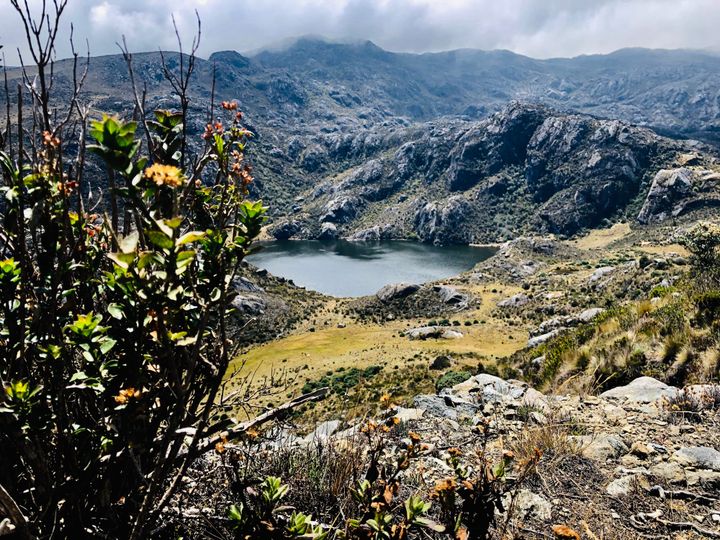
As these cases demonstrate, the opinion is being leveraged much more extensively than the strict academic definition of climate litigation might have you think. In Colombia, for example, it was used to confer explicit rights on the Santurbán páramo ecosystem.
“It's such a joy to see that it is being used broadly,” says Krsticevic.
One of the interesting developments of the AO discussions, Krsticevic notes, is that they brought together climate change and human rights, to the advantage of both topics. “The very strong muscle that the legal system has developed over time is now being reinterpreted. It has given the community more tools to use to address a very pressing situation.”
Political spaces
Things have not moved so quickly on the political front.
A resolution like that of the UN recognising the ICJ AO is not likely to happen at the Organisation of American States (OAS) because it is in a political gridlock and not all members recognise the IACtHR’s jurisdiction.
However, De Windt thinks the AO is starting to filter through into multilateral spaces as states increasingly recognise international cooperation as a legal requirement. She says this was particularly evident during the inaugural Transitioning away from Fossil Fuels conference in Santa Marta, Colombia, in April. Campos agrees: “In Santa Marta, at least in the rooms where I was, everyone was talking about legal obligations and what states are expected to do in international law.”
Colombia also proposed a decision drawing heavily on the IACtHR AO at the fourth Escazú Agreement COP earlier this year, although it was submitted too late to cut through.
There has been more progress at national level. For De Windt, one of the AO’s biggest contributions so far has been its impact on nationally determined contributions (NDCs) to the Paris Agreement.
At least two countries have already integrated its findings into their NDCs. One is Mexico, which, as previously reported in The Wave, substantially improved its measures on climate displacement.
The other is the Dominican Republic. De Windt, who was heavily involved in this process, says climate-vulnerable communities and groups were consulted to make sure they were properly represented in any agreed policies, and work was also done with the private sector exploring what the AO’s strong due diligence requirements meant for business. The most sensitive measures were those in the transport and energy sectors, she says, and the consultations did result in changes being made to the final document.
A lawsuit had been filed challenging a previous version of the Dominican Republic’s NDC, which was put on hold pending the publication of the IACtHR AO. But The Wave understands that it has since been dismissed on procedural grounds.
"The needle is moving"
Cejil also tried to use the AO in the debate around changes to Argentina’s Glacier Law, arguing that any legislative reform affecting glaciers must comply with standards on access to information, public participation, non-regression, prevention, and the protection of ecosystems in the context of the climate emergency.
More generally, De Windt sees evidence of growing understanding that climate measures themselves present risks to human rights, particularly in sectors such as green finance, energy and mining of critical minerals. She says the AO is clear that such measures need to be subject to environmental, social and human rights assessments. “There is no methodology yet to do that, but the needle is moving in that direction.”
What does the future bring?
Krsticevic says there is now a stronger community of practice in climate law, “which is something also important for cross-fertilisation”, noting that many of those that appeared before the IACtHR, including Cejil, have also presented amicus briefs before the African Court.
She anticipates many more judicial decisions coming down based on the AO in the next three to five years.
De Windt expects future litigation challenging states that do not put strong climate measures into national legislation and fail to properly identify and understand their risks. She says judges across the region are actively discussing these issues and listening to their peers further afield too.
Tigre expects some national climate cases to end up at the IACtHR. Perhaps there will even be a case between states - maybe a transboundary damages claim? - although enforcement of the court's decisions remains a serious problem as previous rulings against Peru and Ecuador clearly demonstrate.
On the political front, Krsticevic sees more potential for its use in multilateral spaces. “Some of this developing legal framework is critical for international negotiations, for backing depositions of governments in situations of vulnerability and with disparate harms.”
Between the ICJ’s recognition of certain activities as a potentially “internationally wrongful act" and the potential teeth of human rights law including the Inter-American regime, the sword of Damocles is hanging over polluters, says De Windt. “It has the potential of changing not only the conduct of states, but the conduct of markets and businesses. Those risks are starting to touch on the pockets of powerful interests.”
A note on the use of acronyms: There are two related but separate bodies in the OAS system: the Inter-American Commission on Human Rights and the Inter-American Court of Human Rights. I have no idea who was responsible for naming these two bodies, but whoever it was decided that they would be nearly identical both in English and in Spanish. For years now I've been stubbornly using the acronym IACHR for the court in English because the alternative - IACtHR - is both ugly and clunky. The court’s own ‘I/A Court H.R.’ is even worse.
But since IACtHR is widely used not just academically but in international organisations to differentiate the two bodies I reluctantly concede to the less elegant version and will continue with that in future.