African Court considers evidence on climate advisory opinion

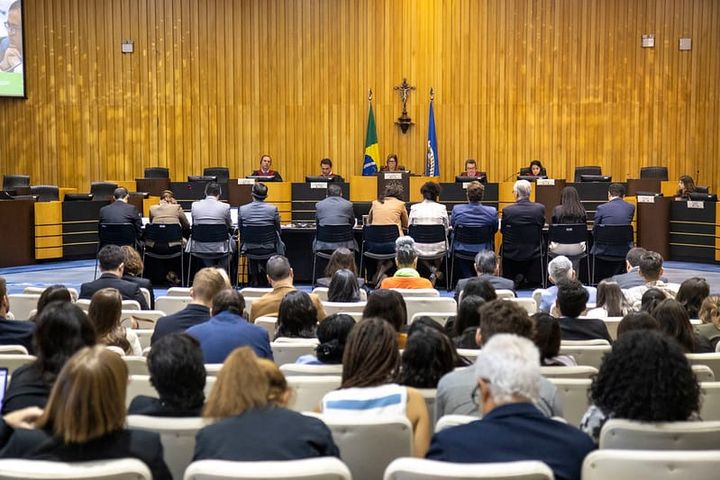
The African Court on Human and People’s Rights is sifting through written submissions from organisations, individuals and states seeking to inform and influence its forthcoming advisory opinion on climate change.
The court was asked to produce the expert document last year by the Pan African Lawyers Union, making it the fourth major international court to do so after the International Tribunal on the Law of the Sea (ITLOS), the Inter-American Court of Human Rights (IACHR) and the International Court of Justice (ICJ).
The African Court has since requested and approved a number of new entities to submit amicus curiae alongside the already approved ones.
Many submissions stress how climate change is already affecting the African continent, from food disruption to flooding, and set out its vulnerability to future impacts. These impacts, combined with Africa’s small contribution to the problem, says Greenpeace Africa in its submission, is why climate change is a “systematic, ongoing violation of the rights of African people".
Despite this, the responses do set out a role for African states in addressing their role in the crisis, including not approving new fossil fuel projects, limiting industrial animal agriculture and managing the flow of funding.
In its submission, the South African Council of Churches focuses heavily on the financial levers that African states can pull, saying they should “exercise due diligence in their participation in multilateral financial institutions” and regulate to limit private financing of fossil fuels and to encourage clean energy.
Greenpeace Africa says states have a duty to regulate the private sector, but that corporations have their own independent human rights obligations too to prevent climate harm. It notes that the extraction of fossil fuels and other resources by multinational corporations has proved to have “minimal local benefit” and replicates exploitative colonial structures.
The NGO goes on to say that developed nations are legally obliged to provide Africa with adequate finance, technology and support. Furthermore, “African states have both the right and the duty to pursue these resources through international cooperation and, where necessary, legal claims for reparations”.
Another submission comes from Kate Mackintosh, Amanda Brown, Ayodele Babalola and John Dover of UCLA’s The Promise Institute for Human Rights, Climate Counsel and the Sudan Human Rights Hub. This focuses on carbon markets, raising three distinct concerns: that such mechanisms risk frustrating, impeding or obscuring state efforts to address climate change; that these markets reproduce and entrench patterns of foreign exploitation and extractivism; and that implementation of carbon market projects across Africa has generated consistent reports of serious violations of individual and collective rights.
However, the African Energy Chamber (AEC) said it wanted to send the court a message that fossil fuels should remain in the continent’s energy mix to ensure a “balanced and inclusive energy transition”. The AEC has asked to submit an amicus brief but it is unclear if permission was granted or if a submission has been formally filed.
The AEC also stresses the importance of the advisory opinion process being led by African voices, noting growing concern across the continent that “climate-related litigation and advocacy – often funded or guided by foreign NGOs – has sought to block financing or development of African energy projects”.
Apart from mitigation, which African states can only have a limited role in, many responses lean on their responsibilities to help citizens and communities adapt.
In its submission, Human Rights Watch focuses on the problems of internal climate displacement and planned relocation, with its work in a fishing community in Senegal as a case study. It asks the court to clarify that states have binding obligations to address the human rights impacts of climate change, including those arising from adaptation measures such as planned relocation.
Greenpeace Africa describes adaptation as “not merely a policy choice but a legal obligation derived from human rights, such as the right to life and health”.
In its submission, the Center for Justice and International Law (Cejil), which played a major role in instigating the Inter-American Court of Human Rights' advisory opinion, shared the standards developed by that court, particularly on access to climate and environmental information and the protection of human rights defenders. The purpose, it says, "was to contribute to a cross-regional dialogue on how human rights courts can respond to the climate emergency and how procedural rights can support communities, defenders and organisations working on climate accountability".
A submission from the Minority Rights Group, seen by The Wave, raises a central preliminary obstacle to the effective protection of indigenous peoples’ and minority rights in the context of the climate crisis as their “persistent lack of formal recognition” by several African states. “This absence of recognition is not merely symbolic,” it says. “It has concrete legal and practical consequences: it renders affected communities invisible in law and policy, prevents the application of tailored safeguards and weakens accountability for violations of their collective rights under the African Charter and other international law tools.”
The Africa Climate Platform has been reaching out to governments to encourage them to make their own submissions. It is unclear how many did so before the end of March deadline, although The Wave hears that the Democratic Republic of the Congo and Somalia at least seem to have done so.