Marjan Minnesma: The Dutch climate activist celebrated by those she sued
It’s not often that governments honour someone who sued them. But Marjan Minnesma, founder and director of Dutch NGO Urgenda, who not only fought the Dutch state in court but won, inspired the kind of adulation that you might only expect from a more obsequious ally.
Minnesma’s death last month at the age of 59 was a surprise to many, except those closest to her, and was met with an outpouring of grief and recognition of her widespread positive influence.
Stientje van Veldhoven, the Netherlands’ minister of climate and green growth who represented the nation at the recent fossil fuel phase-out talks in Colombia, described her as “a visionary who did not wait for politics to get moving”. Even the prime minister paid tribute:
 Rob Jetten
Minnesma was trained in many fields - philosophy, business administration and law - which set her up for a career that required a mix of rationality, practicality and tact.
She was campaigns director for Greenpeace Netherlands for several years before moving into academia and in 2004 took up a job as director of the Dutch Research Institute for Transitions (DRIFT) at Erasmus Universiteit Rotterdam, where she began thinking strategically about how her country could be part of the clean transition and lead the way for others. You can read a more detailed biography of her life here.
In 2007, together with professor of transition studies Jan Rotmans, she set up a non-profit called Urgenda (a portmanteau of urgente and agenda), which ran practical initiatives such refurbishing houses to show they could be weaned off fossil fuels and importing electric cars to kick-start the electric mobility market. Minnesma herself even bulk bought 50,000 solar panels so that she could sell them at a discounted price to home-owners.
Dennis van Berkel, a lawyer who worked with Minnesma for many years at Urgenda, describes her as a “very entrepreneurial type of activist” who wanted to identify the barriers to change - and to show that the real barrier was often a lack of will. Her motto, he says, was “Het kan, als je het wilt”: “It can be done, if you want it.”
Urgenda became well known for this work in the Netherlands and Minnesma as a leading light in the nation’s sustainability field. But it was the climate lawsuit that she initiated that the organisation has now become synonymous with.
The challenge came from Dutch lawyer Roger Cox, whose book Revolution Justified argued that legal action was both a viable and necessary step to drive states to act on climate change. Urgenda had not until then been a litigious organisation, but Minnesma said she felt litigation was required because progress was not happening fast enough. She agreed to take on the case and hired Cox to be part of it.
The lawsuit was formally filed in 2013 when Van Berkel joined the team. He says Minnesma approached the case in the same collaborative and entrepreneurial spirit as her other work; even while it was taking legal action, Urgenda presented the government with a long list of practical measures that it said could be put in place to make the required emission cuts.
“She always said this is a lawsuit out of love,” says Van Berkel. “It was always: ‘Listen, we all need to act. The government is apparently unable to do the thing that they actually know needs to be done, and that they say they know needs to be done, and we just need to give them a push.’”
The NGO had its first legal success in 2015, when a court in The Hague ordered the Dutch government to cut its emissions by at least 25% by the end of 2020, compared with 1990 levels, as its fair share to combat the climate crisis.
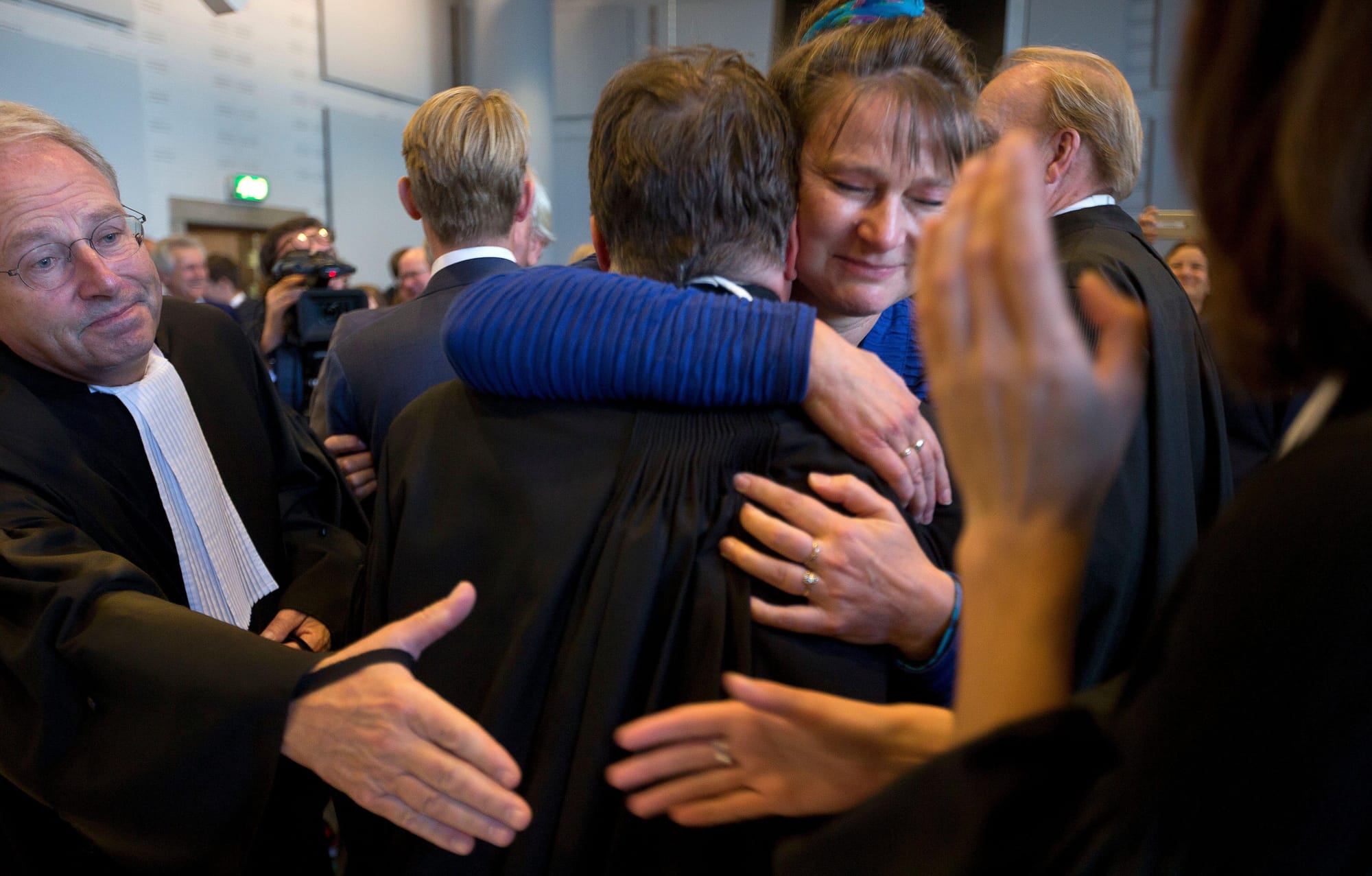
“The first thing she did after the judgment was to thank the judges,” says Van Berkel. “She's in the courtroom, there's all this chaos.. and then this mic comes to her. I don't know what the question was, but the first thing she says is ‘Well, you know, these judges, they're so fantastic because this was a difficult decision’, and that was very typical for her.”
Appeal followed appeal and in late 2019, the Netherlands' top court made headlines when it upheld the initial decision. Not just that, but it said that the government had explicit duties to protect its citizens’ human rights in the face of climate change.
The landmark ruling made the country a test case for tougher global climate policies, requiring sharp cuts in major emission sources such as manufacturing, energy generation, transport and agriculture to meet its tough goal. In practice, it helped further climate action in the Netherlands - and continues to do so - and inspired a whole wave of similar lawsuits against governments around the world from Pakistan to New Zealand.
Jérémie Suissa, executive director of French non-profit Notre Affaire À Tous, which has brought numerous climate cases against the French state as well as corporates such as energy company TotalEnergies, says Urgenda opened the field for strategic climate litigation, just as it did with its other practical environmental schemes. “Before the Urgenda ruling, it was just a crazy idea from a Dutch NGO. Then, it was the sparkle of a global movement. [Minnesma] could have taken the victory and the laurels and slept on it. Instead she worked to disseminate the work, the ambition and the tools all over Europe and beyond.”
Van Berkel says he and Minnesma had always seen the lawsuit as bigger than the Netherlands and she provided a space to explore how it could resonate further. Out of this the Climate Litigation Network was born, which continues to help communities and organisations around the world bring legal action against major polluters. “She trusted the people that were doing the work,” says Van Berkel. “She was a leader without having control.”
“She has left so much energy for all of us to benefit from"
“For me, she was inspiring,” says Dr Roda Verheyen, a lawyer at German law firm Günther Lawyers who represented Saúl Luciano Lliuya in his landmark claim against RWE and is now representing Pakistani claimants in their ongoing case against RWE and Heidelberg.
“When we first met, we agreed so much on using the law for the benefit of climate change, but we also agreed on the value of companionship, and happiness of all the people who lived and worked with or for her and Urgenda,” says Verheyen. “She has left so much energy for all of us to benefit from.”
The Urgenda lawsuit made its mark far outside Europe too. As far back as 2015, Minnesma was described by Australian news website New Matilda as a “climate litigation rockstar”.
Isabelle Reinecke, executive director and founder of the Grata Fund, says Minnesma inspired and guided her team to imagine the Australian Climate Case, in which Torres Strait Islanders sued the state on behalf of their communities, “as something both ambitious and rigorous, anchored in legal excellence, science and a deep commitment to community”.
Although the Torres Strait Islands case is still making its way through the appeal courts, Reinecke says it had already reshaped how the law understands climate change, and how the public understands what is at stake. “We owe her a debt we can no longer repay, and we honour her by continuing the work she believed in.”
'Nobody joins the sad party'
Even after the landmark Urgenda judgment, for which Minnesma won the Goldman Environmental Prize in 2022, she continued to work with the Dutch government to help make it a reality on the ground. Van Berkel says officials and politicians respected her approach, which was “hard on the content, soft on the person”.
“In her aims she was much more radical than some of the other groups, but in her means she was very constructive,” he says. “She was never into trying to polarise.”
“She was a reminder of what a friendly yet tenacious fighter for the environment is,” agrees Verheyen.
Van Berkel appreciates her influence on Urgenda itself too. “There were some very intense periods, but the striking thing is that she herself was never stressed or angry."
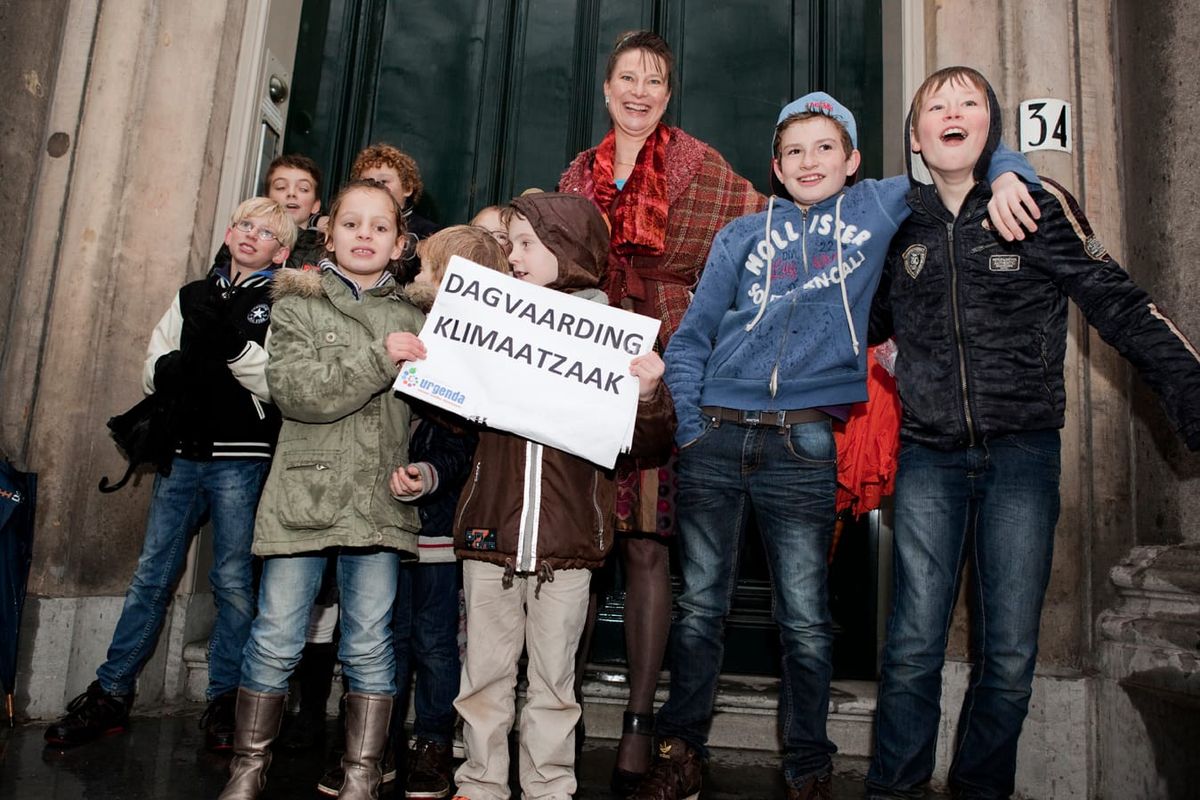
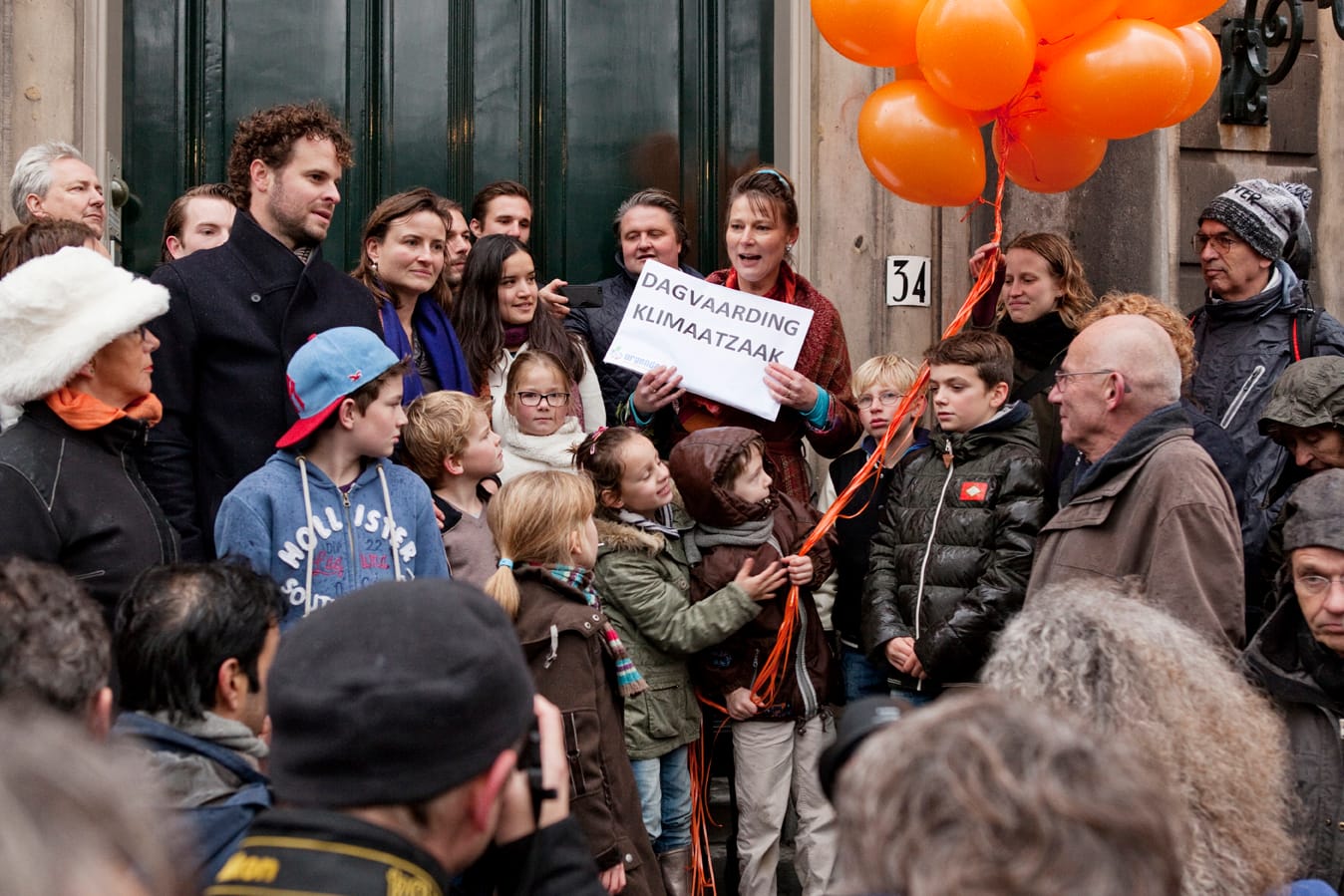
He notes that Minnesma came up with the idea of ‘crowd-pleading’ for the original lawsuit, in which 886 people were persuaded to sign up as co-plaintiffs and to submit their own observations. Many of these came to the Supreme Court in The Hague for the filing of the claim and took part in a photoshoot on the courthouse steps.
“It was raining that first day, but there were people with balloons and they’re all smiling,” says Van Berkel. “She set a standard that when you do something like this, you need to show that you’re having fun doing it. Nobody joins the sad party.”