The legal fight to declare Kenya’s climate crisis a national disaster
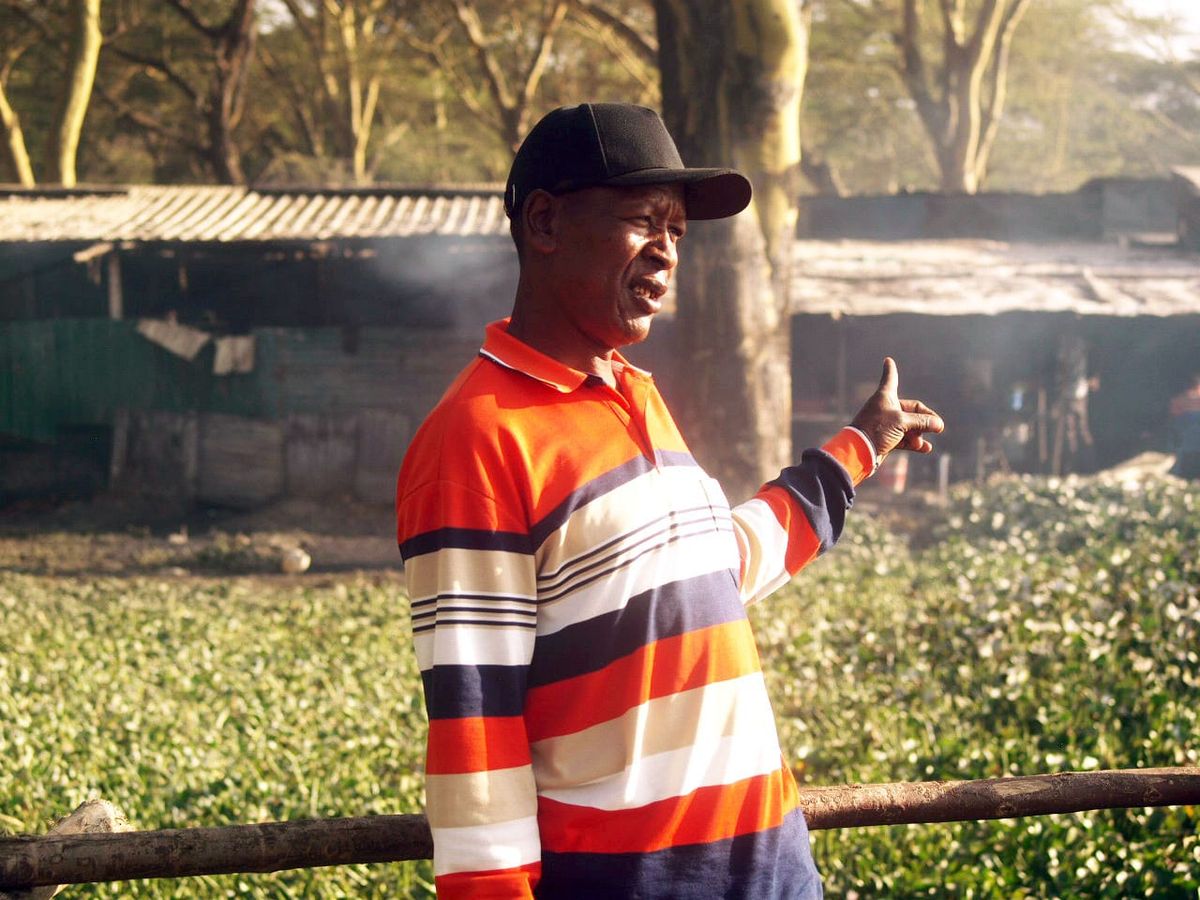
The stain is still visible on Fred Maloba's compound wall in Kihoto, a browned tideline that marks how high the floodwater climbed before it receded. Maloba, 29, has lived in this low-income settlement on the shores of Lake Naivasha for 11 years, working at a flower farm nearby. Last rainy season, the water forced him out of his own home.
"I had to close my house, with my things inside. I pitched camp in a friend's apartment," he says, standing outside the home he could not, for weeks, safely occupy.
It is not only the rain that unsettles Maloba. He has watched the lake surge even when Naivasha has seen no significant downpour, a pattern local residents cannot fully explain. With the coming of an unprecedented El Niño, expected to increase rainfall over the Greater Horn of Africa, he is bracing for another season he may not be able to afford to survive. "I feel scared," he says. "I'm not sure how to proceed with my life if the rains strike once more. I'm unable to move to another place."
Maloba's predicament sits at the centre of a legal question now before Kenyan courts, one that could alter how the state is required to respond to climate change: what does it actually mean, in law, to call something a ‘national disaster’?
One of the cases is a petition before the Environment and Land Court in Kisumu, brought by five farmers, among them retired justice Matthew Emukule. The petitioners want the court to formally declare climate change itself a national disaster, and are seeking roughly KSh 1 billion (US$7.7m) as compensation for loss and damage.
Kenya's Climate Change Act established a National Climate Change Council and a Climate Change Fund, meant to finance research, adaptation, mitigation and support to county governments. Section 15 obliges public entities to build climate action into their own strategies and report on it. Layered on top is the newly signed National Disaster Risk Management Act, along with the Public Finance Management Act, both of which attach emergency funding and expedited relocation mechanisms to a formal disaster designation.
Brian Awuonda, a lawyer representing the petitioners, is quick to stress that the request for a declaration that climate change constitutes a national disaster is only one of 46 in the petition. He tells The Wave that the other 45 address broader constitutional, statutory, institutional and accountability questions. "The declaration should consequently not be understood as the sole or even isolated objective of the litigation."
Nor, he insists, would the words themselves conjure money out of nowhere. "Our position is not that a judicial declaration would, by itself, create an entirely new statutory funding mechanism or automatically place a particular sum of money at the disposal of the petitioners."
Instead, Awuonda argues, the court could recognise that climate change is "not merely a future environmental policy concern, but a present and continuing national crisis," strengthening the legal basis for demanding coordinated state action, accountable use of disaster resources and protection of vulnerable communities.
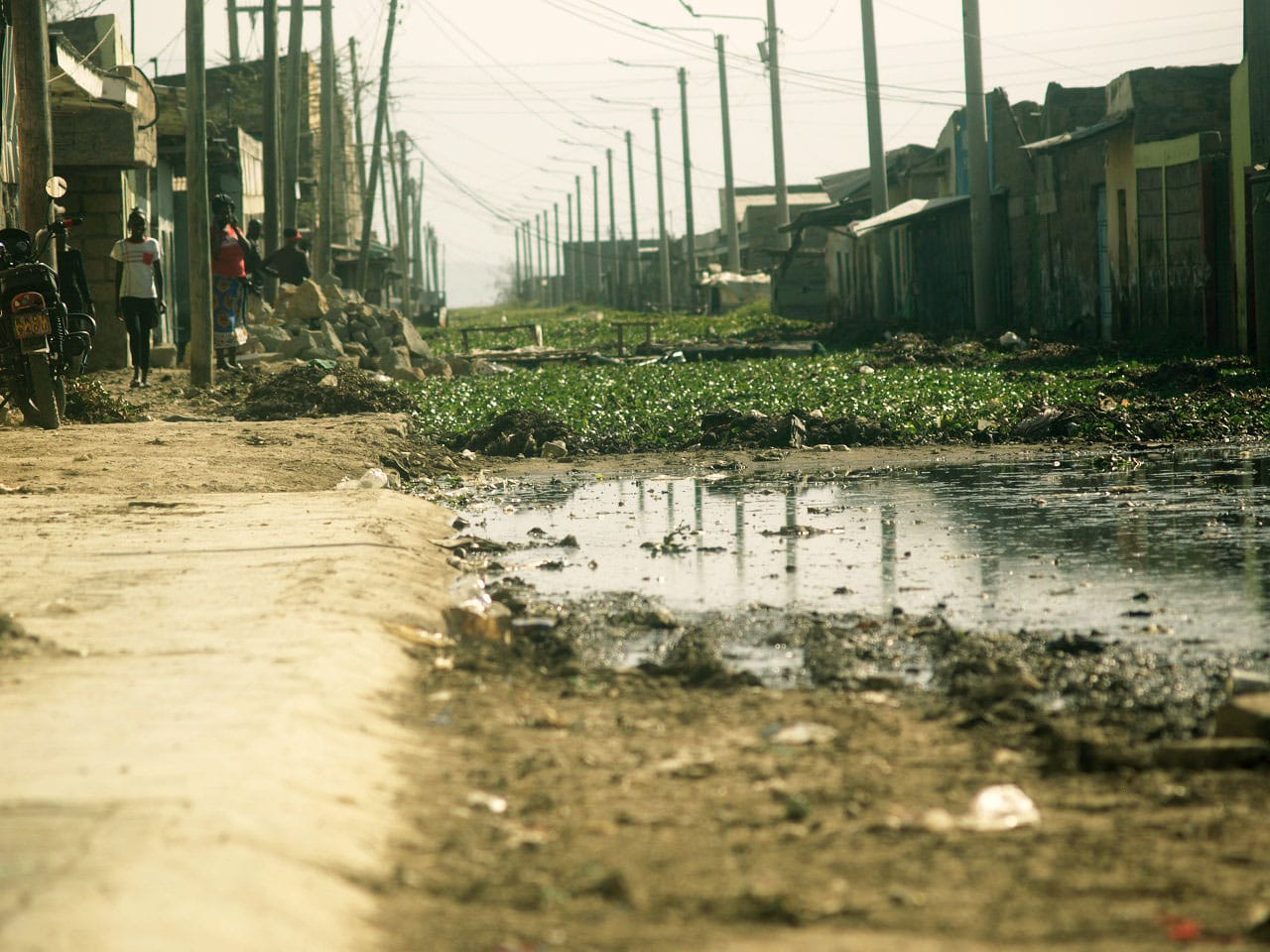
In a separate case brought by displaced Kihoto residents before the Naivasha Environment and Land Court found that the government had failed to act. It ordered emergency resource mobilisation, compensation options, resettlement and the creation of a multi-agency task force, while retaining supervisory oversight over compliance.
“In the alternative, the respondents shall valuate and compensate all affected landowners/victims holding genuine ownership documents and/or whose land has been submerged or repossessed for the riparian reserve whereby the said victims shall surrender the titles to the repossessed land, to the state,” reads the January judgment.
Crucially, the court also rejected the government's long-standing defence that flood victims were simply illegal occupants of riparian land. Peter Mbae, the lead petitioner and a former Nakuru County Assembly member, says the government reached for that argument specifically to avoid a disaster declaration.
"When the floods happened, the national government came and said the people were building on riparian land," he tells The Wave. "For a national disaster, the government has to come in and help the people, either evacuate them or sort them out with an emergency fund. To avoid this, they said it's riparian land. That's why we went to court, so that we can get a declaration that that is not riparian land."
For Mbae, securing the designation is entirely about forcing action. "A national disaster attracts the attention of government, donors and other relevant parties. With the designation, the government can go and get money from the emergency fund."
There are precedents for this. In 2021, then president Uhuru Kenyatta officially declared drought in parts of Kenya a national disaster, authorising public efforts to help affected households, including the distribution of water and food.
Wairegi Kiarie, the lawyer who represented the Kihoto petitioners, points to the underlying mechanism: "The way to get the government to allocate funds is through a budget. As you know, with disasters there is no budget, and you cannot plan for a disaster. Only within and under the disaster management fund is how you can invoke that act and make appropriations."
But a favourable judgment has not yet translated into relief, says Kiarie, because the national and county governments have not complied with the court's orders. In July, the attorney general filed an application to reopen the suit, which is still pending alongside the petitioners' own application for contempt of court. Both are expected to be heard in September.
"This is a climate issue," Kiarie told The Wave, when asked whether the Kihoto flooding sits within the wider climate debate.
The petition itself anchors the Kihoto flooding in climate variability, citing a 2020 parliamentary report that explicitly identified the lake’s surge as a disaster driven by abnormal, climate-linked hydrological shifts. That report recommended emergency relief, relocation and compensation.
Down the road from Maloba, Janet Njeri, a single mother of two and a fruit vendor, describes a harder calculus. She lives in a tenement of single-room units shared with roughly ten other tenants, with communal latrines and washing areas. When the floods come, her belongings, including kitchenware and bedding, are submerged.
Unlike some neighbours who can afford to move temporarily to other parts of town, she cannot. "The latrines usually fill up during the floods, which leaves many of us with no choice but to relieve ourselves in the water," she says. "It becomes difficult to maintain cleanliness in such situations. You cannot even guarantee the hygiene of your food or house." She has fallen ill twice with what she believes was contaminated water, and her children, aged six and eight, fall sick with colds and stomach upsets each time the water rises.
This is the argument Awuonda makes for treating climate change as a single, continuing legal fact rather than a string of disconnected events. "A farmer may survive one drought, but repeated droughts can exhaust savings, livestock, seed reserves and productive capacity,” he says. “A subsequent flood or failed season may then push the household into permanent economic insecurity." Litigating disaster by disaster, he argues, leaves the state perpetually reacting rather than confronting an underlying, ongoing risk.
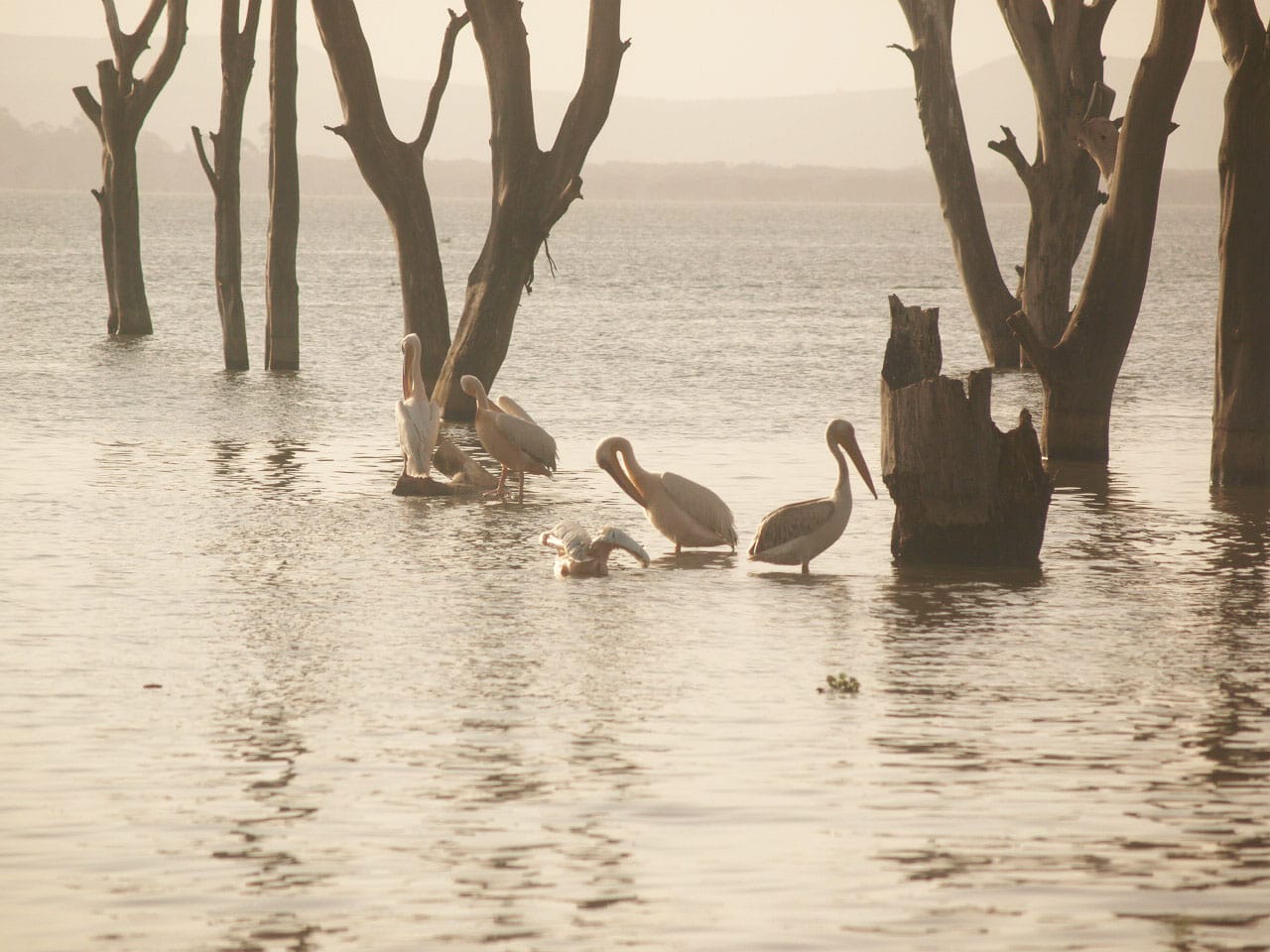
Patrick Sankale, vice-chairman of the Karagita landing beach on the lakeshore, has watched the water's advance for 14 years and is not convinced it can be explained by rainfall alone. Streetlights now stand roughly 50 metres offshore, submerged along with structures that once stood on dry land, and a carpet of water hyacinth has crept some 30 metres inland. "I wouldn't say this is brought about by heavy downpours," he says.
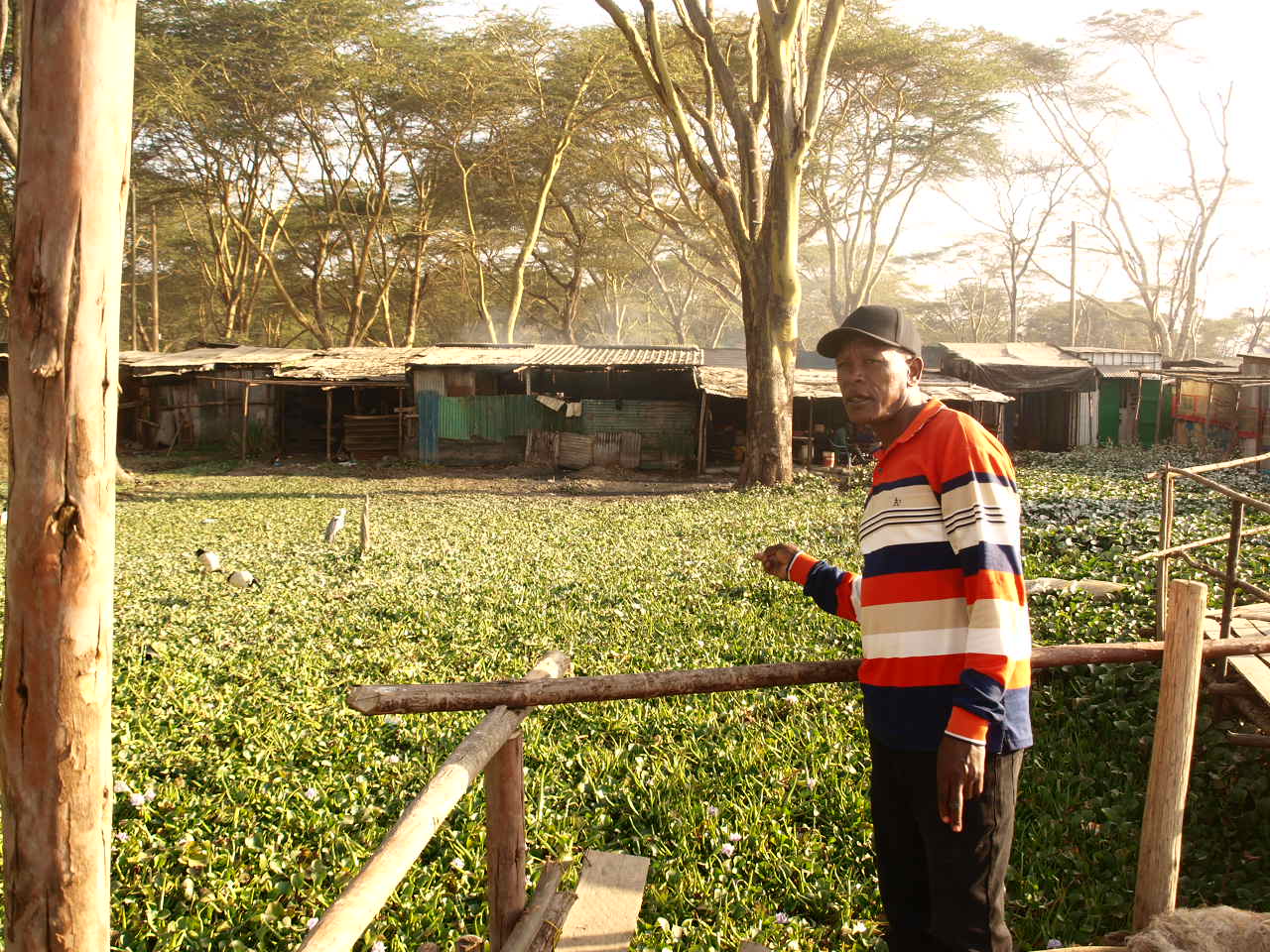
Hydro-geological studies of the Lake Naivasha basin explain why shorelines can burst even under cloudless local skies. As an endorheic lake (meaning it has no natural surface outlet) Naivasha receives roughly 90% of its surface inflow from the Malewa River. The river drains the high-altitude Aberdare Range dozens of kilometers away, where heavy highland precipitation takes days or weeks to travel down the catchment system.
The government has resisted the framing pursued by both petitions, arguing in filings and public statements that stretching the idea of a ‘disaster’ from a discrete event into a continuous planetary process oversteps the separation of powers between courts and the executive.
Awuonda is careful to distance his own case from that fear. "I would not describe the objective as creating a permanent state of emergency in the conventional sense. That is not the purpose of the litigation," he said. "There is an important difference between a state of emergency and a continuing legal obligation. We are pursuing the latter."
He positions the case as a precedent for climate litigation globally. If the Kisumu court accepts the petitioners' core arguments, he says, it could help build "a Kenyan jurisprudence of climate accountability," moving litigation beyond individual project disputes toward systemic accountability for how the state governs climate risk, with lessons for other jurisdictions with constitutional environmental rights.
For Maloba and Njeri the next flood will decide the matter more clearly than any judgment.