On the road with the KlimaSeniorinnen
It was two and a half years ago that a group of older Swiss women gathered in Strasbourg to hear the outcome of their novel lawsuit. They had argued that Switzerland’s inadequate response to the climate crisis was breaching their human rights - and the European Court of Human Rights agreed.
That moment in April 2024 was one of huge celebration, the end of years of national litigation, the careful construction of a legal claim at European level and finally a landmark judgment.
The backlash was swift. Just a month later, Switzerland’s upper house of parliament accused the court of "judicial activism" and claimed there was no reason to take further action because Switzerland was already doing enough. The lower house soon followed suit, voting to reject the ruling.
It was then formally rebuffed by the Federal Council which said the court’s interpretation of the European Convention of Human Rights was too “broad” in extending it to climate change and in accepting a case from an organisation rather than an individual.
Campaigners turned to the Council of Europe’s committee of ministers, which is responsible for monitoring compliance with the European Court of Human Rights, urging it to uphold the ruling.
Despite initially telling the Swiss government that it must do more to show that its national climate plans are ambitious enough, the committee then dialled back its scrutiny, seemingly largely satisfied with the response.
It also "invited" Switzerland "to consider the opportunity of establishing an independent national body suited to the national political structure to monitor its climate policy" - an invitation that Switzerland has now thrown in the bin.
The KlimaSeniorinnen are definitely disappointed. Elisabeth Stern, a member of the group's board with a background as a cultural anthropologist, says she felt “ashamed” of her government. “In hindsight you can say we should have known that would happen but we didn’t.”
On a "roadshow" across Europe, members of the group are connecting with other activists, academics and the wider public. “We really want to share our message about the case and specifically that it has not been implemented yet,” says Stern.
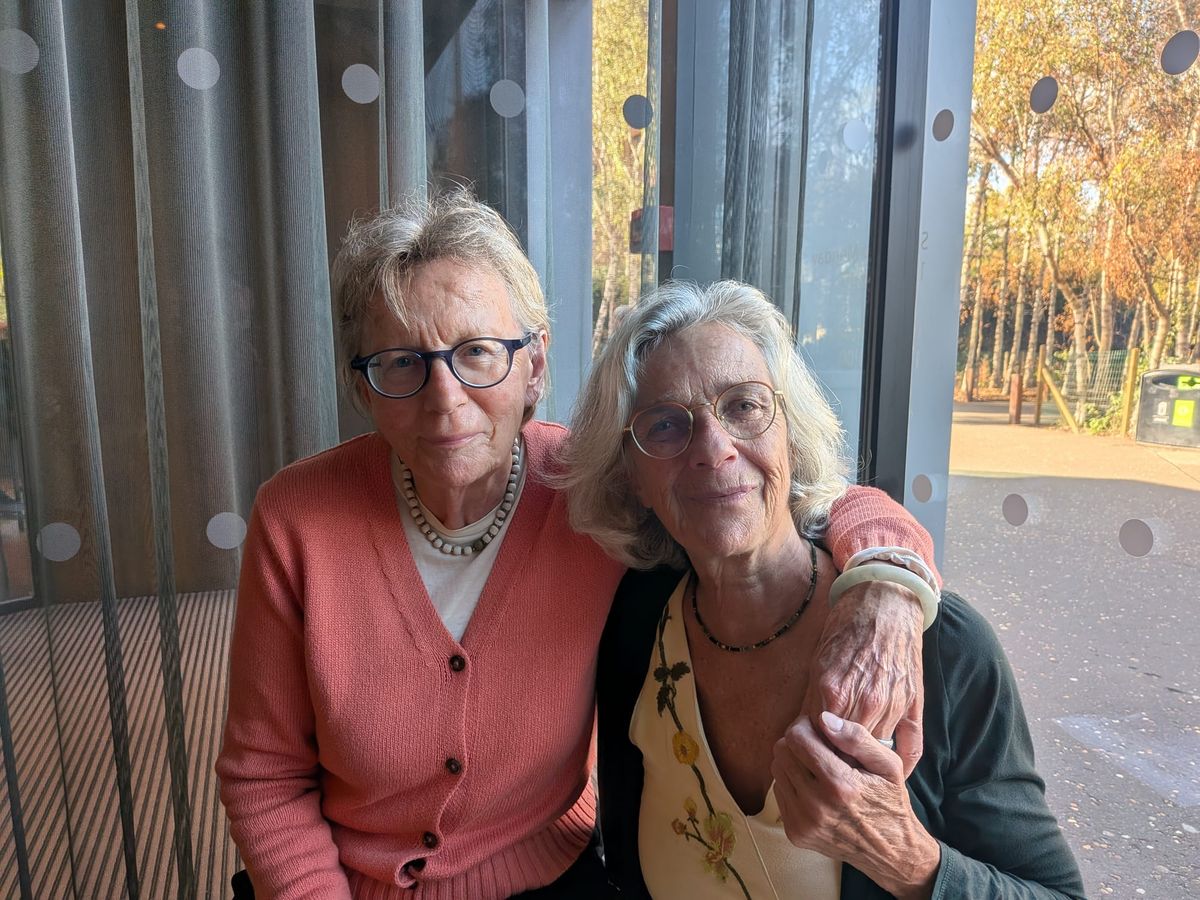
The Wave meets with Stern and another group member Marion Wagner on their London leg, where they describe the ideological battles and vested interests making progress on climate so difficult in their country. Wagner says the judgment was a huge knock to Switzerland’s pride: “It was so threatening to their image of themselves and which they portray outside, all this Heidi thing.”
The ruling did not fling open the door to climate litigation at the European Court of Human Rights, as some had warned. Of the many other climate-related cases waiting in the wings behind the Swiss seniors and the Portuguese youth - including against Germany, Norway, Austria and Russia - nearly all have been struck out. It is only really the most promising claim, brought by a man named Müllner against Austria, that is still awaiting a judgment.
Nonetheless, the judgment has been referenced in key climate cases such as the Bonaire judgment against the Netherlands (currently being appealed), inspired youth climate litigation in Colombia and laid the groundwork for a challenge against France for failing to do its fair share in cutting emissions.
“Across Europe it is being advanced as a basis for human rights claims,” said Marc Willers KC, of Garden Court Chambers, speaking at the LSE at a screening of a documentary about the KlimaSeniorinnen called Trop Chaud. “It emboldens judges to take a step they wouldn’t have taken before.” Willers represented the group at the court alongside Jessica Simor KC, of Matrix Chambers.
Wagner says the case has been influential in subtle ways, giving the KlimaSeniorinnen a narrative to talk about climate change, particularly with young people, and providing a boost to the climate justice movement. “We created a regional group and this spread into politics, arts, education. We are still going to demonstrations. We are small but we try to stay visible.” They even met Alain Berset, secretary-general of the Council of Europe, who said the group had become a “brand”.
With new members still joining the KlimaSeniorinnen, Stern sees one of its biggest impacts as countering ageist and sexist stereotypes. “Women are not just victims,” she says. “We are also agents of change.”
Stern never expected to still be making the same arguments so many years down the line. But with the committee of ministers due to decide in December whether to formally close the case or to keep monitoring compliance, the KlimaSeniorinnen do not intend to disappear any time soon.
Members of the group recently held meetings at the Council of Europe, which were reasonably positive. “They saw us,” says Stern. “We are being told that ministers are actually talking about it again.” However, she is surprised by how much more effective a selfie is as a marketing tool than the nitty gritty of legal argument: “I thought it would be much more professional, really.”