‘This is not just about climate change any more’: How New Zealand bowed to lobbyists to try to maim climate litigation
Two weeks ago, New Zealand’s government made a surprise announcement: it would change the law to stop companies from being sued in civil court for harm linked to climate change.
A bill to amend the Climate Change Response Act 2002 would be laid to prevent findings of liability for tort - a civil law decision where someone has sought redress for loss or harm - over the impact of greenhouse gas emissions in current and future proceedings before the courts. It has not yet been published, so it is not yet clear exactly what the scope will be, but the move would essentially cut off a whole limb of domestic climate litigation.
The aim, said justice minister Paul Goldsmith, was to “provide legal clarity and certainty and to remove the possible development of a new regime that contradicts the framework parliament has already enacted to respond to climate change”. It is not the first time parliamentarians have tried to institute such a change in New Zealand, without success, but a government-initiated bill is much more likely to pass.
That would be a “significant blow to climate justice”, said Harj Narulla, a barrister at Doughty Street Chambers who was counsel for the Solomon Islands during the International Court of Justice’s advisory opinion proceedings.
“The proposal undermines the rule of law and is a clear breach of the separation of powers. This government has used its power to wind back climate protections and exploit fossil fuels and is now trying to prevent the courts from holding polluters accountable,” said Narulla.
Smith v Fonterra
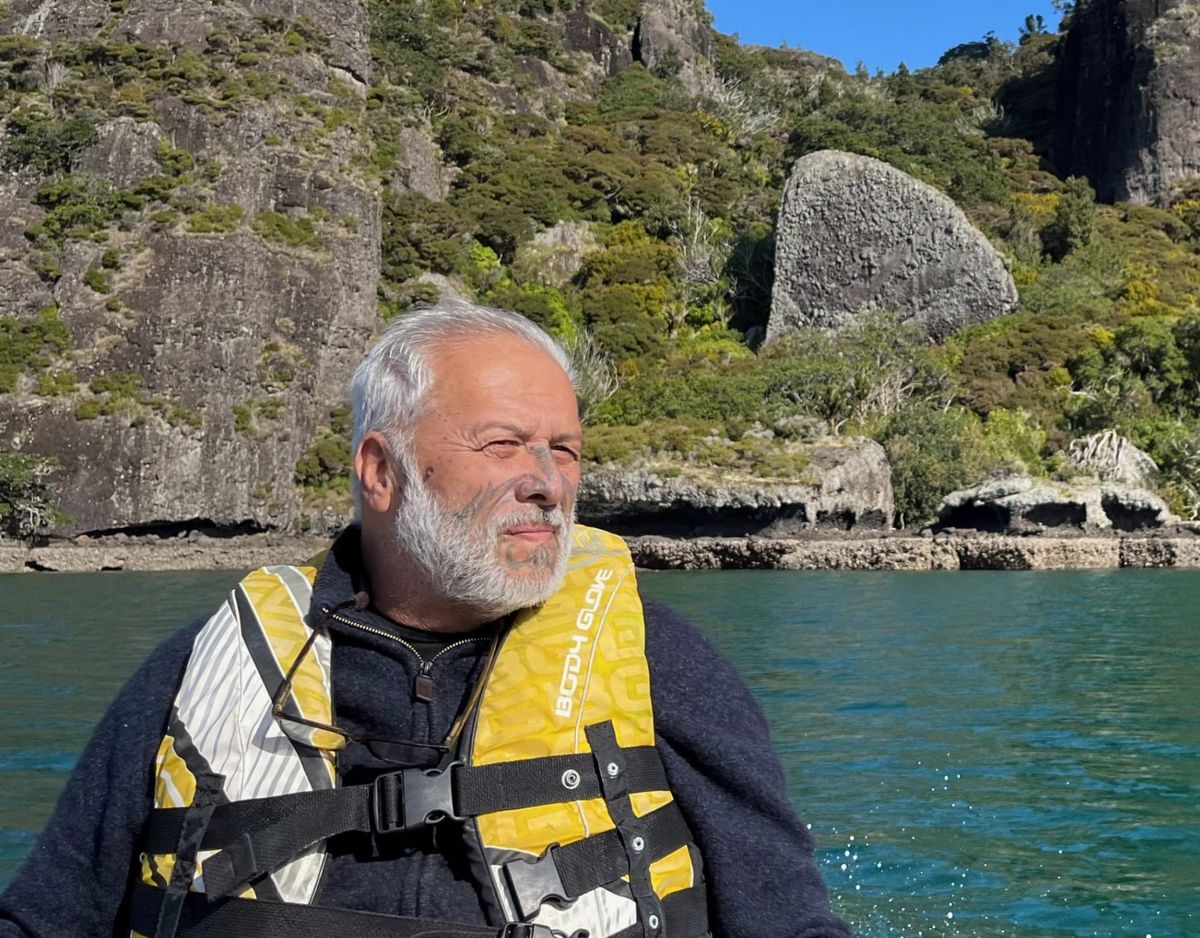
In his announcement, Goldsmith singled out a key domestic climate lawsuit brought by Northland iwi leader Mike Smith against six big companies: Dairy firms Fonterra and Dairy Holdings, energy firms Genesis Energy and Z Energy, New Zealand Steel and coal mining firm BT Mining. (A seventh original defendant, Channel Infrastructure, was dropped after it permanently decommissioned its Marsden Point oil refinery).
Smith argued that these companies caused him harm under public nuisance and negligence law, as well as a third breach of a duty to cease contributing to climate change that has never yet been tested domestically. He doesn’t want money; he wants the companies to immediately stop emitting or contributing to net greenhouse gas emissions.
The Court of Appeal threw out the case in 2021. But the Supreme Court overturned that ruling, allowing the case to continue in a unanimous decision in 2024.
The lawsuit was one of the most advanced climate accountability lawsuits in the world and a trial had been scheduled for April 2027. Smith himself had hoped it would become a breakthrough moment for climate litigation and set legal precedents that could be drawn on within and outside New Zealand.
The Supreme Court stressed that it was not ruling whether the case had a good chance of succeeding, only that “Mr Smith now gets his day in court”. And the whole lawsuit with any accompanying appeals would likely not have concluded for many years.
Nonetheless, Goldsmith said Smith’s lawsuit was “creating uncertainty in business confidence and investments that the government must address”. The new law would halt the case in its tracks, and would also prevent communities from bringing future claims seeking compensation for harm suffered due to climate change.
Smith told The Wave there was “definite fear in the minds of the defendants and the government” that the case might succeed.
Wool of law
New Zealand’s farming industry celebrated the decision and defended Fonterra’s environmental record.
But it sparked huge concern elsewhere. Greenpeace Aotearoa called it a “shocking abuse of executive power” while Smith himself argues the move is “corrosive to democracy”.
A letter signed by more than 100 academics and civil society leaders around the world, coordinated by New Zealand legal charity Lawyers for Climate Action, says the decision compromises national climate objectives, blocks the development of the common law, and risks undermining the rule of law and the separation of powers. The New Zealand Bar Association is also concerned about the "overuse" of retrospective legislation, saying it "creates a bigger more general uncertainty and unpredictability for citizens" than the initial uncertainty the government is trying to remove.
The decision fits the climate record of the incumbent government, which previously hinted it could ignore another Supreme Court ruling that the climate impacts of fossil fuel projects should be assessed - or change the law to get around it.
However, there have long been rumblings of concern from commentators such as those from Atlas Network think-tanks who have repeatedly described the Supreme Court as overstepping its bounds in Smith’s case and warned of a “looming constitutional crisis” (as well as railing against overseas climate rulings).
Over the last few days, the fingerprint of lobbyists, particularly New Zealand’s powerful agricultural industry which has already effectively stalled efforts to regulate farming emissions, has been detected much more clearly.
In 2024, the six remaining defendants met with government ministers and gave them a ‘briefing note’ saying that the “uncertainty” associated with the case was “creating material sovereign risk and significant uncertainty for the international investment community in New Zealand”. They expressed confidence that the case would not succeed, but warned that if it did it would hugely damage the economy. They then set out a proposed amendment to the Climate Change Response Act 2002.
To complicate matters, when the Environmental Law Initiative, a non-profit that has brought its own climate litigation against the government, submitted a freedom of information in early 2025 these documents were not disclosed; Smith only learned about the meetings and briefing note when Fonterra and Z revealed them after the minister’s announcement on 12 May.
The Environmental Law Initiative has accused the government of suppressing corporate lobbying and is calling for an inquiry.
The New Zealand government and Z Energy were approached for comment but did not respond. Fonterra did. It pointed to a statement welcoming the minister’s announcement of a legislative amendment and said it has consistently maintained that the matters in Smith’s case should be decided by parliament not the courts. It added: “Like many businesses Fonterra engages constructively with government on a number of policy issues including climate change and emissions reductions.”
Herd it on the grapevine
As well as domestic lobbying, the government’s decision did not happen in a global vacuum.
Last year, a German court ruled that major emitters can theoretically be sued for climate damages in an important test case between Peruvian farmer and mountain guide Saúl Luciano Lliuya and energy company RWE.
Dutch NGO Milieudefensie also has two ongoing cases against Shell in the Netherlands; the Supreme Court recently heard the final appeal in one while the other is still in the early stages. And a third one against Dutch bank ING.
A number of other cross-border cases are now in the works, part of a growing movement to hold corporate climate polluters legally accountable.
While courts in these countries have accepted that they are an appropriate venue for thrashing out such questions, it is undeniable that climate litigation has led to a political backlash elsewhere, including Switzerland and the UK. And in places it has deliberately been made harder for claimants to recover their costs, writes Sam Bookman, a lecturer at Melbourne Law School.
New Zealand may also have been emboldened by developments in the US, where Republican politicians recently introduced draft legislation that would shield fossil fuel companies from climate liability lawsuits as part of a broader attempt to protect the fossil fuel industry from litigation. Similar laws are being passed at state level in Tennessee, Utah, Iowa, Oklahoma and Louisiana.
Elizabeth Donger, senior legal associate for the Climate Litigation Network whose work focuses on strategic corporate cases, sees New Zealand as an international outlier, saying there is no indication that countries other than the US are considering similar measures.
But while “this sort of executive overreach is uncommon in a high rule of law country” like New Zealand, Narulla warned that it represents a “dangerous precedent and increases the chances of conservative parties in Australia and the UK adopting similar policies”.
Narulla stressed that the proposals do not necessarily help the private sector as a whole. “For example, insurance companies and other corporates grappling with the rising costs of climate change are likely to start seeking damages from big polluters as private law remedies become more established. This change would remove their right to seek damages as well, alongside denial of justice for communities and individuals.”
Extinguishing legal liability does not remove the costs of climate change, stressed Narulla: “It just transfers them onto those who are most vulnerable and least able to pay.”
"This is about whether billion dollar corporations can use their political access to shut down legal challenges they do not want to answer"
Depending on how the legislation is drafted, it could potentially be challenged on constitutional grounds.
Narulla noted the International Court of Justice advisory opinion’s affirmation that countries’ obligations extend to corporations within their jurisdiction. “The government is flouting these obligations by shielding corporates from liability at the expense of communities impacted by climate change.”
The Supreme Court itself found in its 2024 decision in the Smith case that adapting private law to climate change is a legitimate judicial function, said Donger, “just as it adjusted the common law during the industrial revolution”.
“If passed in the form described, expect immediate legal challenges about consistency with the New Zealand Bill of Rights Act 1990, access to justice principles and whether retrospective extinguishment of claims is justified,” Smith told The Wave.
Even if the legislation goes ahead, Narulla said it would not mean the end of climate litigation in New Zealand. “Research shows that climate legislation leads to climate litigation, which means that we would likely see more litigation focusing on the Climate Change Response Act 2002 and the Emissions Trading Scheme.”
The Māori leader intends to carry on fighting, both inside and outside the courtroom. As well as challenging the legislation, he said he has options to shift the argument to other legal grounds and to refocus his work on political, public law, and international advocacy rather than tort litigation.
Stopping is not an option. “This is not just about climate change anymore,” said Smith. “This is about whether billion dollar corporations can use their political access to shut down legal challenges they do not want to answer.”